

AntiDepressant Capsules ~~ GRAS Certified Ingredients
$86.95
A simple and easy way to get a great blend for Depression especially Post Partum in an easy to take capsule.
Description
Blender’s Notes AntiDepressant Capsules ~~ GRAS Certified Ingredients:
Steep Me Self-Help combinations are a wonderful way to get health benefits outside of the standard tea leaf. This blend was built to help with those short- and long-term bouts of depression. This can be used by young, old, and safe and effect for breastfeeding mom is going through Post – Partum Depression. This blend works on the connection from the brain to the adrenals, offering adrenal support. We also work on the balancing of hormones estrogen, progesterone, and testosterone. This blend will also increase GABA (Gamma-aminobutyric acid)- which is a calming neurotransmitter to help raise endorphins and make the body feel settled. This blend remains breastfeeding safe making it an excellent choice for postpartum depression. It has been safe with other depression treatments. Depression is a mood disorder that causes a persistent feeling of sadness and loss of interest. Also called major depressive disorder or clinical depression, it affects how you feel, think, and behave and can lead to a variety of emotional and physical problems. You may have trouble doing normal day-to-day activities, and sometimes you may feel as if life is not worth living. More than just a bout of the blues, depression is not a weakness, and you cannot simply “snap out” of it. Although depression may occur only once during your life, people typically have multiple episodes. During these episodes, symptoms occur most of the day, nearly every day and may include: ~~Feelings of sadness, tearfulness, emptiness or hopelessness ~~ Angry outbursts, irritability or frustration, even over small matters ~~ Loss of interest or pleasure in most or all normal activities, such as sex, hobbies or sports ~~ Sleep disturbances, including insomnia or sleeping too much ~~ Tiredness and lack of energy, so even small tasks take extra effort ~~ Reduced appetite and weight loss or increased cravings for food and weight gain ~~ Anxiety, agitation or restlessness ~~ Slowed thinking, speaking or body movements ~~ Feelings of worthlessness or guilt, fixating on past failures or self-blame ~~ Trouble thinking, concentrating, making decisions and remembering things ~~ Frequent or recurrent thoughts of death, suicidal thoughts, suicide attempts or suicide ~~ Unexplained physical problems, such as back pain or headaches. For many people with depression, symptoms usually are severe enough to cause noticeable problems in day-to-day activities, such as work, school, social activities, or relationships with others. Some people may feel miserable or unhappy without really knowing why. Depression (major depressive disorder) – Symptoms and causes – Mayo Clinic
In this blend we started with our Steep Me Medicinal Mushrooms because they offer many health benefits. Medicinal Mushrooms have several biological pathways through which they may support mood. Medicinal Mushrooms may influence neurotransmitters involved in mood regulation and they contain triterpenoids and polysaccharides that show anti‑inflammatory effects, and inflammation is linked to depression. They may help modulate stress pathways associated with depressive symptoms and their polysaccharides may improve the gut microbiome, which influences the gut‑brain axis — a key factor in mood regulation. Plus, these compounds may protect neurons from oxidative stress and inflammation. Steep Me Medicinal Mushrooms may influence serotonin, dopamine, and norepinephrine — key mood‑regulating chemicals. They appear to help regulate the HPA axis, the body’s stress‑response system, they show anti‑inflammatory activity, and they may improve ATP production and reduce fatigue, which can indirectly help with depressive symptoms like low energy. Plus, they show improved memory and cognitive function, which can be affected in depression. Medicinal Mushrooms raise serotonin in the brain, a key neurotransmitter for mood regulation, the beta‑glucans and antioxidants in the mushrooms help reduce inflammatory activity and they may increase brain‑derived neurotrophic factor, a protein essential for mood stability and neuroplasticity. In addition, they influence cortisol, melatonin, and GABA, which can indirectly improve mood by improving sleep quality. Next, we added Holy Basil because it can reduce cortisol levels, which may help ease stress‑related mood symptoms. Compounds like eugenol and rosmarinic acid reduce inflammation and oxidative stress, both linked to depression. Holy basil may positively influence serotonin, dopamine, and GABA — all involved in mood regulation. Holy basil may improve memory and mental clarity, which can be affected during depression, and it helps the body adapt to psychological stress and maintain emotional balance. Holy Basils supportive effects include: Reduced stress and anxiety — by lowering cortisol and calming the nervous system ~ Improved emotional balance — through neurotransmitter modulation ~ Less fatigue and better energy — by reducing stress‑induced exhaustion ~ Better sleep quality — by calming mental activity and supporting hormonal balance ~ Enhanced focus and clarity — helpful when depression causes cognitive fog. Ashwagandha was also included because it can significantly reduce cortisol levels, which may ease stress‑related depressive symptoms. Ashwagandha may influence neurotransmitters involved in mood regulation and it modulates the HPA axis which is the body’s central stress‑response system, often dysregulated in depression. Ashwagandha’s anti‑inflammatory effects may help counter inflammation‑linked depressive symptoms and improve sleep quality ~ Better sleep can indirectly improve mood, and studies show ashwagandha may help with insomnia. Turmeric was added because it contains an active compound, curcumin, has been widely studied for its anti‑inflammatory and antioxidant effects. Because inflammation and oxidative stress are strongly linked to depression, researchers have explored whether curcumin can help improve mood. Research from your sources highlights several biological pathways: Curcumin helps reduce oxidative stress, which may support brain health, and it affects neurotransmitters involved in mood regulation. Curcumin in Turmeric may influence pathways related to neuroplasticity and stress response and will enhance antidepressant effects showing its effectiveness of antidepressant medications when used together.
Next, we added Angelica. Angelica contains compounds such as ferulic acid which may influence serotonin and the HPA axis. Angelica shows anti‑inflammatory and antioxidant activity, which may indirectly support mood. It may improve metabolic pathways disrupted in depression and traditional Chinese medicine links “blood deficiency” with mood disorders; Angelica helps modulate hematological abnormalities associated with depressive symptoms. Spirulina was included because it is a nutrient‑dense blue‑green algae rich in protein, vitamins, minerals, antioxidants, and tryptophan. Spirulina contains tryptophan, the amino acid your brain uses to make serotonin — a neurotransmitter essential for mood regulation. Chronic inflammation is linked to depression; spirulina’s phycocyanin is a powerful anti‑inflammatory compound. Spirulina reduces oxidative stress, which can damage brain cells and worsen mood disorders plus it acts as a prebiotic, supporting the gut‑brain axis — a major regulator of mood. Corydalis was added because it is a traditional Chinese medicinal herb known for its pain‑relieving and sedative properties. Alkaloids like THP (tetrahydropalmatine) may reduce excitability in the brain, producing calming effects that are contained in Corydalis. THP blocks certain dopamine receptors, which may influence mood and relaxation and often time pain and depression often overlap, corydalis’ analgesic effects may indirectly improve mood. Steep Me Magnesium Blend because added because Magnesium participates in hundreds of biochemical reactions, many of which directly affect mood, stress regulation, and brain function. Magnesium helps balance serotonin, glutamate, and GABA — all essential for mood stability. It helps regulate the HPA axis and lowers cortisol, easing stress‑related mood symptoms. Magnesium promotes healthy brain adaptation and resilience, which is often impaired in depression, and it has been shown to enhance sleep. Because chronic inflammation is linked to depression, and magnesium helps calm inflammatory pathways. Being deficient in Magnesium can manifest into ~ Fatigue and low energy ~ Trouble sleeping ~ Anxiety or irritability ~ Muscle cramps or twitches ~ Headaches or migraines ~ Brain fog or poor focus. Next, we added Rhodiola. Rhodiola rosea is an adaptogenic herb, meaning it helps the body respond to physical and emotional stress. Rhodiola may influence serotonin, dopamine, and norepinephrine, like how some antidepressants work. It helps suppress cortisol, which can worsen depression and fatigue. Fatigue is a core symptom of depression; rhodiola has been shown to improve energy levels in human studies. Rhodiola may improve attention, reaction time, and cognitive performance, which can be impaired during depression. These anti‑inflammatory and antioxidant effects help protect the brain from stress‑related damage. Motherwort (Leonurus cardiaca) was included because it is used as a calming herb for the nervous system. Motherwort has long been used to reduce nervous tension, restlessness, and irritability. The compound leonurine shows antidepressant‑like effects in stressed mice by reducing inflammation in the brain. Anxiety and sleep problems often worsen depression and motherwort’s calming effects may indirectly support mood, and motherwort may influence amino acids and pathways involved in mood regulation which can help with stress, anxiety, emotional tension, and sleep, which can indirectly improve depressive symptoms.
We also included Griffonia. Griffonia simplicifolia is a West African plant whose seeds are naturally rich in 5‑HTP (5‑hydroxytryptophan) — the direct biochemical precursor to serotonin. Because serotonin plays a key role in mood regulation, sleep, appetite, and emotional balance, grifonin is widely studied for its potential mood‑supporting effects. 5‑HTP crosses the blood–brain barrier and converts directly into serotonin, supporting emotional balance and higher serotonin levels help regulate cortisol and calm the nervous system. 5‑HTP also converts into melatonin, helping regulate sleep cycles — poor sleep often worsens depression. Griffonia support effects include ~ 5‑HTP improved depressive symptoms comparably to fluoxetine ~ 5‑HTP supplementation often with fewer side effects than antidepressants ~ Griffonia is traditionally used to fight depression and manages serotonin regulation. Steep Me Seaweed Blend was added because seaweed is one of the richest natural iodine sources, which supports healthy thyroid hormone production. Seaweed contains magnesium, a mineral known to help regulate neurotransmitters and reduce stress‑related symptoms. Seaweed provides B vitamins (including folate and B12), which support serotonin and dopamine synthesis—key mood‑regulating chemicals. Compounds like fucoxanthin, fucoidan, and alginate in Seaweed help reduce inflammation and oxidative stress, both of which are associated with depression. Seaweed’s prebiotic fibers feed beneficial gut bacteria, which influence mood and emotional regulation through the gut‑brain connection. Seaweeds supportive benefits include ~ Improved mood stability through better thyroid and neurotransmitter function ~ Reduced stress and anxiety via magnesium and B‑vitamin support ~ Better energy and reduced fatigue thanks to iron and iodine content ~ Enhanced cognitive clarity through antioxidant and anti‑inflammatory compounds ~ Improved sleep quality due to magnesium and nervous‑system regulation. Steep Me Vitamin B Blend was also included because B‑vitamins play a significant role in brain chemistry, and low levels of certain B vitamins — especially B6, B9 (folate), and B12 — are strongly linked to depression. Steep Me Vitamin B Blend supports serotonin and dopamine production B6, B9, and B12 help synthesize neurotransmitters that regulate mood. High homocysteine is linked to depression; B6, B9, and B12 help break it down. Steep Me Vitamin B Blend Improves brain energy metabolism and helps convert food into energy, supporting mental clarity and reducing fatigue. B Vitamins influence gut microbes involved in mood regulation. Steep Me B Vitamin Blend supportive benefits include ~ Low levels are linked to higher depression risk ~ Improve depressive symptoms in all ages ~ B‑vitamin supplementation enhanced antidepressant response. Ginseng was added because Ginseng shows positive effects on mood, stress, and emotional balance. Ginseng may help balance serotonin, dopamine, and norepinephrine — key mood‑regulating chemicals. Reduces inflammation Chronic inflammation is linked to depression; ginseng’s ginsenosides have anti‑inflammatory effects. Ginseng helps regulate the stress‑response system, which is often dysregulated in depression. Ginseng may protect brain cells and promote neurogenesis, supporting cognitive and emotional resilience. Fatigue is a major symptom of depression and ginseng may help improve energy and mood.
Next, we added Vitamin D3 because it activates genes involved in serotonin synthesis, which is essential for mood regulation. Vitamin D3 reduces inflammation and chronic inflammation is linked to depression, and it can help regulate inflammatory pathways. Vitamin D3 receptors exist throughout the brain and influence emotional processing and neuroplasticity. Vitamin D3 modulates the HPA axis which is the body’s stress‑response system, often dysregulated in depression and it improves neurotransmitter signaling which affects dopamine and norepinephrine pathways involved in mood and motivation. We also included Chia & Flax Seeds. Both chia and flax seeds are rich in nutrients that support brain health, neurotransmitter balance, and the gut–brain axis—all of which play a role in mood regulation. Chia Seeds contain: ~ ALA omega‑3s, fiber, magnesium, and antioxidants, all linked to mood support ~ Regulate serotonin, blood sugar, and inflammation, which influence mood. Flax Seeds contain: ~ Omega‑3 fatty acids (ALA) — support brain function and reduce inflammation ~ Fiber — nourishes gut bacteria, supporting serotonin production ~ Magnesium — essential for nerve function and mood regulation ~ Antioxidants — reduce oxidative stress linked to depression. Next, we added Shatavari Root because it is an adaptogenic herb, meaning it helps the body cope with physical and emotional stress. Shatavari has antioxidant, anti‑inflammatory, and neurotransmitter‑modulating effects — all of which are relevant to depression. Shatavari helps regulate cortisol and improve stress resilience, which can ease stress‑related mood symptoms. Shatavari contains compounds like racemofuran, asparagamine A, and racemosol that protect brain cells from oxidative stress — a factor linked to depression. Shatavari’s anti‑inflammatory compounds may help reduce this burden. Shatavari’s antioxidants have strong antidepressant‑like effects and influence neurotransmitters involved in mood regulation and it supports hormonal stability. Elderflower was also included because it contains flavonoids and phenolic acids that reduce inflammation. Elderflower polyphenols help reduce oxidative stress, which can affect brain health and mood. Elderflowers can be used to promote calm, clarity, and relief from emotional stagnation or sadness and improved physical and mental well‑being as part of broader health improvements. Oat Straw was also included because it has long been used as a nervine herb — meaning it nourishes and calms the nervous system. Modern research supports some of these traditional uses, especially for stress, anxiety, and mood regulation. Oat straw is described as “one of the most nourishing and gentle herbs” for the nervous system, helping with stress, irritability, and emotional exhaustion. It has been used to calm anxiety and stress, which often accompany depression. Oat straw extract has been shown to improve mental well‑being, including mood and cognitive function and may reduce cytokines associated with depression, hinting at anti‑inflammatory mood benefits. Oat straw may increase prefrontal cortex activity, which participates in mood regulation and executive function. Plus, it has a mild sedative effect, helping with insomnia — a common symptom of depression.
Schisandra was added because it is a well‑studied adaptogen — an herb that helps the body regulate stress. Because chronic stress, HPA‑axis dysregulation, inflammation, and neurotransmitter imbalance all play roles in depression, schisandra’s actions make it a meaningful herb to consider for mood support. Schisandra may help balance serotonin, dopamine, and norepinephrine — neurotransmitters central to mood regulation. As an adaptogen, schisandra modulates the HPA axis and lowers stress hormones, which can ease stress‑related depressive symptoms. It contains anti‑inflammatory and antioxidant effects, its lignans and schisandrins reduce oxidative stress and inflammation, both linked to depression. Depression can often affect memory and focus, schisandra may enhance clarity and mental performance. Schisandra is traditionally used to improve vitality, calm the nervous system, and enhance emotional stability. Bupleurum was included. Bupleurum been used for centuries in East Asian medicine as a “Jie Yu” (depression‑relieving) herb. Bupleurum characteristic effects on neurotransmitters, inflammation, and stress pathways. Bupleurum compounds such as saikosaponin A and D influence serotonin and dopamine pathways involved in mood regulation. Saikosaponin A increases BDNF and CREB signaling, which are often reduced in depression. Bupleurum flavonoids help reduce inflammatory cytokines linked to depressive symptoms. It influences cortisol‑related pathways, helping regulate stress — a major contributor to depression and in Traditional Chinese Medicine, “liver qi stagnation” is associated with emotional imbalance; Bupleurum is a primary herb for restoring flow. And finally, we added Wild Yam. Wild Yam is primarily associated with hormone balance, anti‑inflammatory effects, blood sugar regulation, and muscle cramp relief. wild yam can help people feel calmer or more centered because of its hormone‑balancing effects and can tone down hormone related mood swings.
~~This product has been officially lab tested and meets the requirements for GRAS (General Regarded as Safe) Testing ~ a designation directed by the FDA for food and supplements. Public Health Microbiology Foundation evaluated it, and they officially consider this product a “non-TCS commodity” and is safe as a human food product & human dietary supplement~~
NOTE: “This/these claim(s) has/have not been evaluated by the Food and Drug Administration. This product is not intended to diagnose, treat, cure or prevent any disease.”
Features AntiDepressant Capsules ~~ GRAS Certified Ingredients:
- Ready to Go
- Lots of individual flavor based on the ingredients
- All Wildcrafted Herbs
- All Organic where Wildcrafted is not available
- Maintenance Plan Recommend 1-2 cap/day as Needed – Trust your body
- Caffeine: None
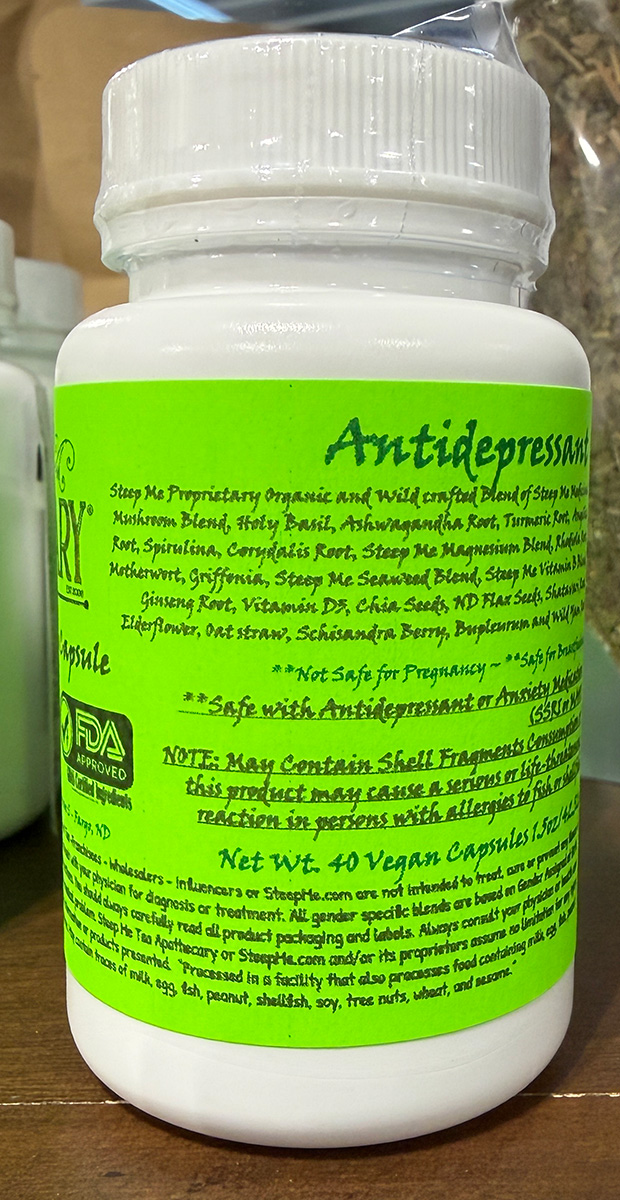
Ingredients: Steep Me Proprietary Organic and Wild crafted Blend of Steep Me Medicinal Mushroom Blend, Holy Basil, Ashwagandha Root, Turmeric Root, Angelica Root, Spirulina, Corydalis Root, Steep Me Magnesium Blend, Rhodiola Root, Motherwort, Griffonia, Steep Me Seaweed Blend, Steep Me Vitamin B Blend, Ginseng Root, Vitamin D3, Chia Seeds, ND Flax Seeds, Shatavari Root, Elderflower, Oat straw, Schisandra Berry, Bupleurum and Wild Yam Root
Not Safe for Pregnancy
Safe for Breastfeeding
Safe with Antidepressant or Anxiety Medication (SSRI or MAOI)
NOTE: May Contain Shell Fragments Consumption of this product may cause a serious or life-threatening reaction in persons with allergies to fish or shellfish.
Alternatively, try our Calming Hug Phyto~Nutrition Tea OR Anxiety Phyto~Nutrition Capsule OR Anxious Brain Phyto~Nutrition Capsule OR Mood Balance Micro~Nutrition Capsule
NOTE: This/these claim(s) have/have not been evaluated by the Food and Drug Administration. The products offered by Steep Me Tea Apothecary -Franchisees – Wholesalers – Influencers or SteepMe.com are not intended to treat, cure, or prevent any illness or disease. If you have or suspect that you have a medical problem, consult with your physician for diagnosis or treatment. All gender specific blends are based on Gender Assigned at Birth. Use herbs as per instructions and always watch for any allergic reactions. You should always carefully read all product packaging and labels. Always consult your physician or health care provider before using any herbal products, especially if you have a medical problem. Steep Me Tea Apothecary and SteepMe.com and/or its proprietors assume no liability for any injury, illness or adverse effects caused by the misuse and/or use of the information or products presented
NOTE: When using Teas, Capsules, Tinctures and Micro-Nutrition to help with your ailment ~ please remember this is a marathon ~ we recommend an investment of time of at least 6 months to see positive change. Any gender specific blends are based on gender assigned at birth.
“Processed in a facility that also processes food containing milk, egg, fish, peanut, shellfish, soy, tree nuts, wheat, and sesame. May contain traces of milk, egg, fish, peanut, shellfish, soy, tree nuts, wheat, and sesame.”
Benefits of taking a supplement through capsule form. https://www.realpromise.com/en/what-are-the-advantages-of-capsules/
Additional information
| Weight | 5 oz |
|---|
Benefits
Related products
New