

New

Description
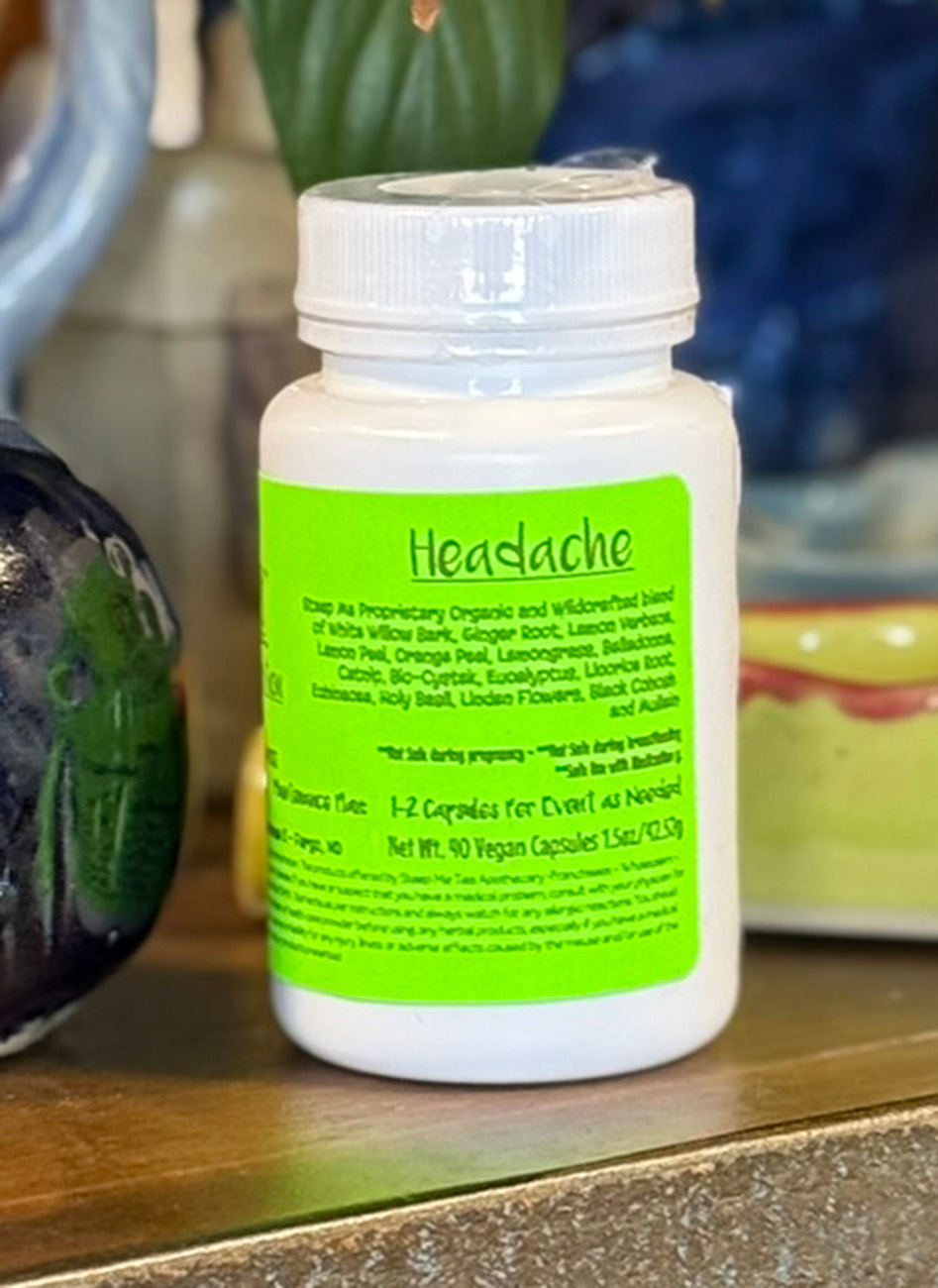
Blender’s Notes Headache Capsules:
Steep Me Self-Help Tea combinations are a wonderful way to get health benefits outside of the standard tea leaf. This combination of herbs helps with your Headache and migraine symptoms. Headaches are a pain in your head or face that is often described as a pressure that is throbbing, constant, sharp, or dull. Headaches can differ regarding pain type, severity, location, and frequency. These include the splitting; throbbing head pain most often comes in the form of a tension headache or a migraine headache. Migraines are more intense. Migraines usually cause a pounding, throbbing pain on one or both sides of the head and can be accompanied by nausea, vomiting or increased sensitivity to light, sound, or odors. Drinking a warm beverage can be calming and soothing and can also activate different nerves and receptors that can be pain-relieving.
The ingredients we used in this blend include White Willow Bark. White willow bark (Salix alba) is one of the most historically important herbs for pain relief, including headaches and migraines, because it contains salicin, the natural precursor to aspirin. Salicin is metabolized into salicylic acid in the body which then provides pain relief and anti-inflammatory action, like aspirin but gentler on the stomach. White Willow reduces prostaglandin synthesis, calming neurovascular inflammation central to migraine attacks. It is effective for tension headaches, migraines, and musculoskeletal pain and is often used when headaches are linked to inflammation or stress which is useful when headaches are associated with fever or systemic inflammation. Borage was added because it is known for its soothing properties, and it helps the body cope with stress and nervous tension. Borage is rich in GLA, which converts to prostaglandin E1, a compound with anti-inflammatory and vasodilatory effects and it can help reduce neurovascular inflammation involved in migraine attacks. The GLA in Borage supports healthy blood vessel tone and circulation. Since migraines often involve vascular constriction, borage may help stabilize vascular responses. Traditional herbal use of borage leaves and flowers includes calming the nervous system and easing stress-related headaches and its mild sedative effect may reduce tension-type headaches. Borage is sometimes used for PMS and menopausal symptoms, both of which can trigger migraines and by modulating prostaglandins and hormones, it may indirectly reduce hormonally driven headaches. Next, Ginger and Cinnamon were added. Ginger and cinnamon are both warming, anti-inflammatory herbs that may help with chronic headaches and migraines. Ginger contains gingerols and shogaols, which inhibit prostaglandins and reduce neurovascular inflammation. Ginger can be as effective as sumatriptan for acute migraine relief. Ginger influences serotonin pathways, which are central to migraine onset, and it can help reduce nausea and vomiting, common migraine symptoms. Ginger also improves blood flow and reduces platelet aggregation, easing vascular constriction linked to migraines. Cinnamon is rich in cinnamaldehyde and eugenol, which reduce inflammatory cytokines and oxidative stress and can calm neurovascular inflammation indirectly. Cinnamon promotes blood flow and warmth, easing vascular tension and is used for cold-type headaches (linked to poor circulation). Cinnamon’s warming aroma reduces stress and tension, which can trigger migraines. Lemon Verbena is also a calming herb, excellent for relaxing and aiding nerves and anxiety, full of Vitamin C, which is helpful for bad headaches. Lemon verbena (Aloysia citriodora) is traditionally valued as a calming nervine, mild analgesic, and anti-inflammatory herb, which may help with stress-related headaches and migraines. Lemon verbena contains citral, limonene, and verbascoside, which calm the nervous system and reduces stress and anxiety which are common migraine triggers. Lemon Verbena contains verbascoside and flavonoids that help lower oxidative stress and inflammatory cytokines which can help calm neurovascular inflammation involved in migraine attacks. Lemon Verbena can help with neuralgia and headache pain by modulating pain perception pathways. It also aids digestion and mild vasodilation which can trigger migraines. Lemon and Orange Peel were added because it is great for the immune system and contains high doses of Vitamin C which are great for headache and migraine management. Lemon Peel is rich in vitamin C and flavonoids (hesperidin, eriocitrin) that reduce oxidative stress and inflammation and that can help calm neurovascular inflammation linked to migraines. Lemon tea promotes hydration and mild detoxification, which can reduce headache triggers from dehydration or toxin buildup. Lemon has a bright, uplifting scent that reduces stress and tension headaches, and its inhalation may ease migraine-related nausea. Orange Peel contains hesperidin, naringenin, and vitamin C, which support vascular health and reduce inflammation and can help stabilize blood vessel function, relevant in migraine pathophysiology. Orange peel has mild sedative and anxiolytic effects, reducing stress-related headache triggers and the natural sugars can help prevent dehydration-induced headaches.
We also added Lemongrass. Lemongrass contains great quantities of myrcene, which is a bioactive compound with analgesic properties. It can help to relieve mild pain, like cramps, muscular soreness, and headaches. Lemongrass (Cymbopogon citratus) is traditionally used for pain relief, stress reduction, and circulatory support, which may help with tension headaches and migraines. Lemongrass contains citral, geraniol, and flavonoids that reduce inflammation and oxidative stress and help calm neurovascular inflammation linked to migraines. Lemongrass relaxes smooth muscles and reduces spasm and is useful for tension-type headaches caused by neck/shoulder tightness. Lemongrass has been used as a mild sedative and anxiolytic which can help reduce stress-related headaches and migraine triggers tied to nervous system hyperactivity. Lemongrass promotes mild vasodilation and improves blood flow and can ease vascular constriction, a common migraine mechanism. Belladonna is considered a top remedy for relieving throbbing and violently painful headaches and migraines that may result from colds, sinus issues, or injuries. The migraine will begin at the back of the head and radiate at the right brow area of the head before the pain settles behind the eyes. We also added Catnip. Catnip is a wonderful sedative and helps relax your body and relieve stress and is safe for kids. It will function as a pain reliever for your headaches and can even work for migraines. Catnip is an herb that has been used for generations to treat conditions such as anxiety, insomnia, and migraines. Catnip contains nepetalactone, which can promote feelings of relaxation. Bio-Cystek or Rock Rose as also added because it is rich in polyphenols and flavonoids, the rock rose plant contains gastroprotective properties that protect you from serotonin and reserpine-induced mucosal congestion, it may also help to prevent fatigue, headaches, muscle cramps, and low blood pressure. Eucalyptus was also added because it can help with tension headaches by relaxing and soothing, easing the stress that can cause a headache if your headaches are caused by sinus issues, eucalyptus can help relieve sinus tension that causes the headaches by opening the nasal passages and clearing the sinuses. Eucalyptus contains eucalyptol which clears nasal passages and reduces sinus inflammation and is helpful for sinus headaches and migraines triggered by congestion. Eucalyptus reduces pro-inflammatory cytokines and oxidative stress and can ease neurovascular inflammation linked to migraines. It also helps to relax tense muscles in the neck and shoulders making it effective for tension-type headaches that can evolve into migraines. Its menthol-like cooling sensation improves circulation and provides pain relief and can reduce vascular constriction often associated with migraines. Licorice Root can help with Low blood sugar that can set off a headache. It is also an adaptogenic herb, which means it helps the body cope with stress by helping it raise or lower natural compounds, as necessary. And stress is often underlying many headaches. Licorice contains glycyrrhizin and flavonoids that inhibit pro-inflammatory cytokines (like TNF-α, IL-6) since migraines involve neurovascular inflammation, this may help reduce frequency or severity indirectly. Licorice prolongs the half-life of cortisol by inhibiting 11β-hydroxysteroid dehydrogenase and that can stabilize stress responses and reduce adrenal fatigue, which are common migraine triggers. Licorice is often paired with nervines (lemon balm) or adaptogens ( holy basil) to enhance resilience against stress-induced headaches. Licorice improves vascular tone and reduces oxidative stress, potentially easing vascular instability linked to migraines. Echinacea was also added because it contains alkylamides, caffeic acid derivatives, and polysaccharides that modulate cytokines and reduce inflammation. Since migraines involve neurovascular inflammation, echinacea could theoretically provide indirect benefit, but this has not been studied in migraine-specific trials. By balancing immune responses, echinacea may reduce systemic inflammation that can worsen headache frequency in individuals with chronic infections or immune dysregulation. Echinacea may have mild pain-relieving effects.
Holy Basil was also added. Holy basil (Tulsi, Ocimum sanctum) may help with chronic headaches and migraines by acting as an adaptogen, anti-inflammatory, muscle relaxant, and nervine herb. Tulsi lowers cortisol and balances neurotransmitters, reducing stress—a major migraine trigger and helps regulate the autonomic nervous system, calming overactive stress responses. Holy Basil contains eugenol, rosmarinic acid, ursolic acid, and other compounds with pain-relieving and anti-inflammatory properties and may reduce neurovascular inflammation that drives migraine pain. Holy Basil essential oil acts as a natural muscle relaxant, easing tension headaches caused by tight neck/shoulder muscles which are useful for stress-related or posture-induced headaches. It also has compounds like citronellol which improve blood flow and reduce vascular constriction and can help prevent migraines linked to poor circulation. We also added Linden Flowers. Linden flowers (Tilia spp.) are traditionally used to ease tension headaches and migraines thanks to their calming nervine, mild sedatives, antispasmodic, and anti-inflammatory properties. Linden flowers contain flavonoids (tiliroside, quercetin, kaempferol) and volatile oils (farnesol, linalool) that calm the nervous system. This relaxation helps reduce stress-induced headaches and may lower migraine triggers linked to nervous system hyperactivity. Linden acts as a muscle relaxant, easing vascular and muscular tension that contributes to migraines and is useful for headaches tied to neck/shoulder tightness or digestive spasms. They are rich in phenolic acids (caffeic, chlorogenic) and flavonoids, linden reduces oxidative stress and inflammation which can help calm neurovascular inflammation, a key mechanism in migraines. Linden Flowers also promotes mild vasodilation and improves vascular tone since migraines often involve blood vessel constriction; this gentle circulatory support may ease symptoms. Next, we included Mullein. Mullein (Verbascum thapsus) may help relieve headaches and migraines thanks to its anti-inflammatory, calming, and mild sedative properties. Mullein contains flavonoids, saponins, and iridoid glycosides that reduce inflammation. Since headache/migraines often involve neurovascular inflammation, mullein’s compounds may help calm vascular irritation. It also has mild nervine properties, which can ease tension and stress-related headaches, and the calming effect may reduce migraine triggers linked to nervous system hyperactivity. Mullein in a tea can aid pain relief, including headaches. Its soothing mucilage and antioxidant compounds may indirectly reduce pain perception. Migraines can be worsened by poor oxygenation or sinus congestion. Mullein’s expectorant and lung-supportive effects may help relieve secondary triggers. We also added in Guava. Guava is rich in vitamin C, quercetin, and carotenoids, which reduce oxidative stress and inflammatory cytokines. This may help calm neurovascular inflammation involved in migraine attacks. The flavonoids in guava improve blood vessel tone and circulation because migraines often involve vascular constriction, guava’s vasoprotective effects may reduce frequency or severity. Guava contains B vitamins (especially B3, B6) that support neurotransmitter balance and helps regulate serotonin and dopamine pathways, which are central to migraine onset. Guava is a reliable source of potassium and magnesium, minerals that stabilize vascular and muscular function and magnesium deficiency is a known migraine trigger, so guava may help indirectly. Chronic inflammation and immune stress can worsen headaches so Guava has immune-balancing properties which may reduce systemic triggers.
We also added Lemon Myrtle. Lemon myrtle (Backhousia citriodora) is not a primary migraine remedy, but it may provide supportive benefits through its anti-inflammatory, antioxidant, calming, and antimicrobial properties. Lemon myrtle contains citral (geranial + neral) and flavonoids that reduce oxidative stress and inflammatory cytokines and may help calm neurovascular inflammation involved in migraine attacks. Lemon Myrtle is traditionally used as a relaxing tea or aromatherapy herb and it helps reduce stress and anxiety, which are common migraine triggers. Lemon myrtle’s antimicrobial and decongestant properties can ease sinus-related headaches and reduce congestion that worsens migraine pain. Rosehips were also included. Rose hips contain polyphenols, galactolipids, and vitamin C, which reduce inflammatory cytokines and since migraines involve neurovascular inflammation, this may help lower attack frequency. Rosehips are rich in vitamin C, carotenoids (beta-carotene, lycopene), and flavonoids, rose hips combat oxidative stress. Oxidative stress is linked to migraine severity and chronic headache syndromes. Rose hips improve endothelial function and circulation, potentially reducing vascular instability that triggers migraines. Antioxidants and flavonoids may help stabilize neurotransmitter activity, indirectly supporting migraine prevention. Chronic inflammation and immune stress can worsen headaches; rose hips balance immune responses. We also added Tarragon. Tarragon (Artemisia dracunculus) is not a primary migraine remedy, but it may offer supportive benefits for chronic headaches through its anti-inflammatory, circulatory, and calming properties. Tarragon contains flavonoids and phenolic compounds that reduce oxidative stress and inflammation and helps calm neurovascular inflammation involved in migraine attacks. Tarragon provides potassium and manganese which are minerals important for vascular tone and nerve function. Potassium helps regulate blood pressure, which can influence headache frequency. It is traditionally used for sleep problems and stress relief it may reduce tension-type headaches triggered by nervous system hyperactivity. Black Cumin was also included. Black cumin (Nigella sativa, also called black seed) is traditionally used for pain relief, inflammation reduction, and nervous system support, which may help with tension headaches and migraines. Black Cumin contains thymoquinone which inhibits COX-2 enzymes and reduces inflammatory cytokines, like NSAIDs. This can help calm neurovascular inflammation central to migraine attacks. Traditional Unani and Islamic medicine recommend black cumin for tension-type headaches because it is a mild sedative and calming effects may reduce stress-related headache triggers. Black cumin has antihistamine and antiallergic properties, which can ease sinus-related headaches and has benefits for allergic rhinitis and sinusitis, indirectly reducing headache frequency. Black cumin may help lower blood pressure and improve circulation since migraines often involve vascular constriction; this vascular support may reduce severity.
Next, we added in Elderflower. Elderflower (Sambucus nigra) is not a primary migraine remedy, but it may provide supportive benefits for chronic headaches through its anti-inflammatory, antioxidant, nervine, and decongestant properties. Elderflowers contain flavonoids (quercetin, rutin) and phenolic acids that reduce oxidative stress and inflammatory cytokines which can be involved in migraine attacks. Elderflower is traditionally used as a gentle nervine tea to reduce stress and anxiety it can help with tension-type headaches and stress-triggered migraines. Elderflower is a classic remedy for sinus congestion, colds, and allergies by reducing sinus pressure, it can ease sinus-related headaches that can trigger migraines. Gynostemma was also added. Gynostemma (Gynostemma pentaphyllum, also called jiaogulan or “southern ginseng”) is an adaptogenic herb with strong anti-inflammatory, antioxidant, and neuroprotective properties. It is rich in saponins, flavonoids, and polysaccharides that reduce oxidative stress and inflammatory cytokines that help calm neurovascular inflammation, a key driver of migraine attacks. Gynostemma can reduce nerve inflammation and protect against neurodegeneration and ease nerve-related pain and support long-term migraine prevention. It also acts as an adaptogen, balancing cortisol and stress responses because stress is a major migraine trigger; gynostemma may reduce frequency by improving resilience. Gynostemma supports blood pressure regulation and vascular tone since some migraines often involve vascular constriction, this stabilizing effect may reduce severity. Plantain was also added. Plantain (Plantago major or Plantago lanceolata, not the banana-like fruit) is a traditional medicinal herb with anti-inflammatory, analgesic, antioxidant, and nervine properties. Plantain leaves contain aucubin, flavonoids, and tannins that reduce inflammatory cytokines and help calm neurovascular inflammation involved in migraine attacks. Plantain helps with relief of headaches, neuralgia, and localized pain because it can help modulate pain perception pathways. Plantain is rich in polyphenols and vitamin C, which reduce oxidative stress which is linked to migraine severity and chronic headache syndromes. Plantain is a classic remedy for coughs, colds, and sinus congestion and by reducing sinus pressure, it may ease sinus-related headaches that can trigger migraines. It is also used as a gentle nervine to reduce stress and tension which helps with stress-related headaches. Self-Heal was added also. Self-heal (Prunella vulgaris), also called “heal-all,” is a traditional medicinal herb with anti-inflammatory, antioxidant, nervine, and vascular-supportive properties. It contains rosmarinic acid, ursolic acid, and flavonoids that inhibit inflammatory cytokines which help calm neurovascular inflammation involved in migraine onset. Self-Heal is rich in polyphenols that reduce oxidative stress in neural tissue which is linked to migraine severity and chronic headache syndromes. Traditionally used as a gentle nervine tea to ease stress and anxiety, Self-Heal helps reduce tension-type headaches and stress-triggered migraines. It can help improve endothelial function and circulation which stabilize blood vessels, reducing vascular instability that contributes to migraines. Self-Heal is known for balancing immune responses and reducing systemic inflammation which can worsen migraine frequency. Next, we added Horehound because it contains marrubiin, flavonoids, and phenolic compounds that reduce inflammation and that can help calm inflammatory pathways. Horehound has Marrubiin, it has demonstrated pain-relieving and muscle-relaxing properties, and this can ease tension-type headaches and reduce vascular spasms linked to migraines. Horehound may improve circulation by reducing vascular inflammation and better blood flow can reduce vascular instability, a common migraine mechanism. Horehound as a tea has been used to relax the nervous system and ease cramps and this Stress reduction may indirectly lower migraine frequency. Finally, we added Skullcap. Skullcap (Scutellaria lateriflora – American skullcap, and Scutellaria baicalensis – Chinese skullcap) is a nervine and anti-inflammatory herb traditionally used for stress, anxiety, and pain relief. Skullcap contains flavonoids (scutellarin, baicalin) that act on GABA receptors which promote relaxation, reduce anxiety, and help prevent stress-triggered headaches. Skullcap reduces pro-inflammatory cytokines and oxidative stress which can help calm neurovascular inflammation central to migraine onset. Skullcap is used to ease muscle tension and spasms, especially in the neck and shoulders and can help tension-type headaches that overlap with migraines. Skullcap contains baicalin and baicalein shows neuroprotective effects supporting long-term nervous system health and can reduce frequency of migraines linked to neuroinflammation.
NOTE: “This/these claim(s) has/have not been evaluated by the Food and Drug Administration. This product is not intended to diagnose, treat, cure or prevent any disease.”
Features Headache Capsules:
- Ready to Go
- Lots of individual flavor based on the ingredients.
- All Wildcrafted Herbs
- All Organic where Wildcrafted is not available.
- Maintenance Plan: 1-2 Capsules Per Event as Needed
- Caffeine: None
Ingredients: Steep Me Proprietary Organic and Wildcrafted blend of White Willow Bark, Ginger Root, Lemon Verbena, Lemon Peel, Orange Peel, Lemongrass, Belladonna, Catnip Leaf, Bio-Cystek, Eucalyptus Leaf, Licorice Root, Echinacea, Holy Basil, Linden Flowers, Black Cohosh Root and Mullein.
Alternatively, try our Headache Kicker Phyto~Nutrition Capsules OR Calming Hug Phyto~Nutrition Tea OR Melon-Aid RTD Pickle Brine OR Pain Management Phyto~Nutrition Capsules
Not Safe for Pregnancy
Not Safe for Breastfeeding
Safe Use with Migraine Medication
NOTE: This/these claim(s) have/have not been evaluated by the Food and Drug Administration. The products offered by Steep Me Tea Apothecary -Franchisees – Wholesalers – Influencers or SteepMe.com are not intended to treat, cure, or prevent any illness or disease. If you have or suspect that you have a medical problem, consult with your physician for diagnosis or treatment. All gender specific blends are based on Gender Assigned at Birth. Use herbs as per instructions and always watch for any allergic reactions. You should always carefully read all product packaging and labels. Always consult your physician or health care provider before using any herbal products, especially if you have a medical problem. Steep Me Tea Apothecary and SteepMe.com and/or its proprietors assume no liability for any injury, illness or adverse effects caused by the misuse and/or use of the information or products presented
NOTE: When using Teas, Capsules, Tinctures and Micro-Nutrition to help with your ailment ~ please remember this is a marathon ~ we recommend an investment of time of at least 6 months to see positive change. Any gender specific blends are based on gender assigned at birth.
Benefits of taking a supplement thru capsule form. https://www.realpromise.com/en/what-are-the-advantages-of-capsules/
Best herbs to combat a headache naturally. https://www.healthline.com/health/headache-tea#peppermint
Additional information
| Weight | 5 oz |
|---|
Benefits