Full Moon Parasite Cleanse
From: $80.00
Virus ~~ GRAS Certified Ingredients
From: $18.00
Rise and Shine
From: $14.00
Great Winter Blend that tastes just like coffee!
Description
Limited Supply Winter Tea
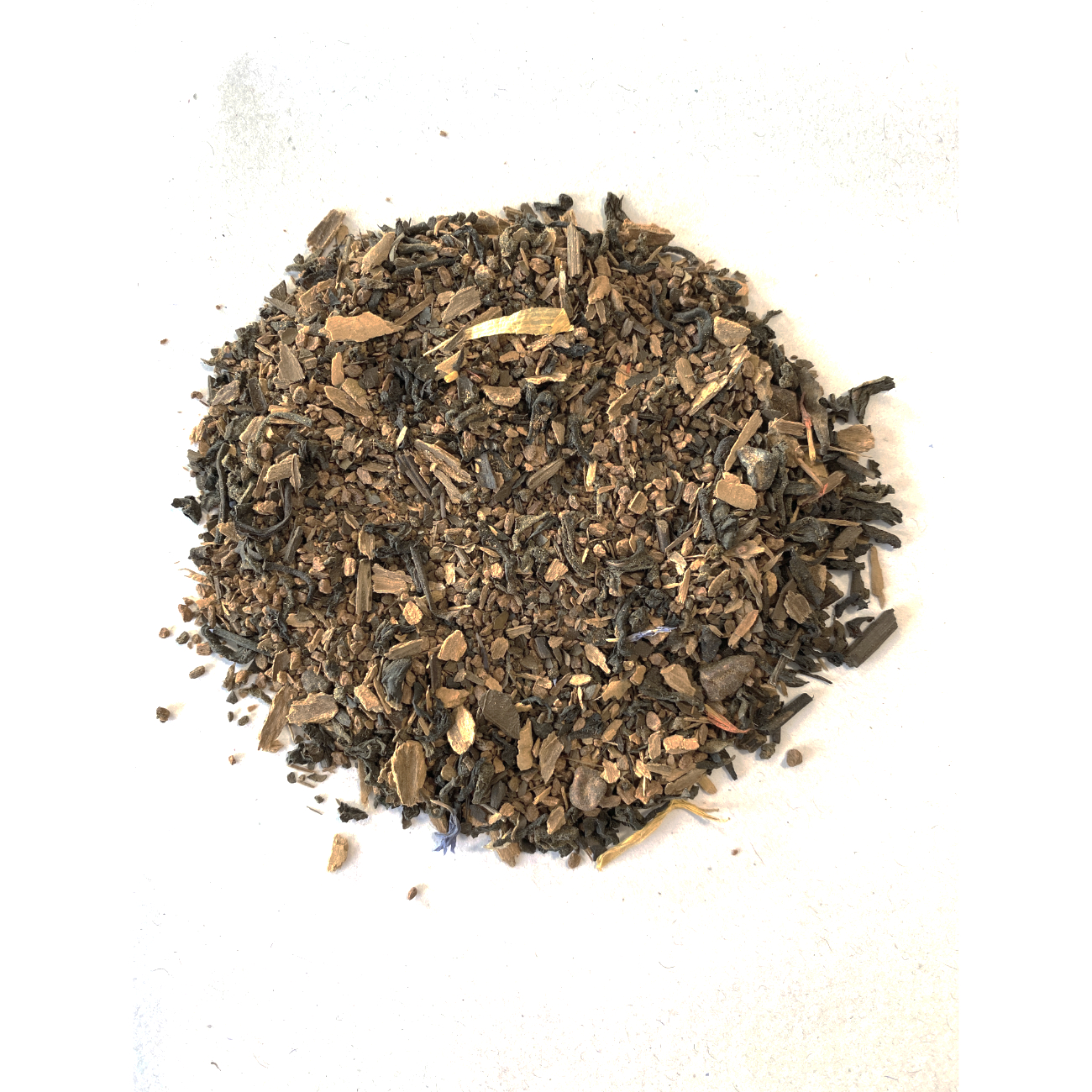
Blender’s Notes Rise and Shine:
When we first introduced our Dark Tea or Pu erh to our customer…it took some time to become popular due to its unique taste, and dark and rich flavor…but now there isn’t a day where we don’t introduce it to someone, and they love it. The loose Dark Tea from Yunnan Province in China is aged by Microbial Fermentation. We sell the Ripe or Shou Pu erh and it pairs well with many of our additions. What is Pu-erh? It is made from the Camellia sinensis plant, the same source as green, oolong, and black teas. Unlike other teas, Pu-erh undergoes microbial fermentation and aging, giving it a deep, earthy taste and probiotic qualities – at times it is earthy, woody, sometimes sweet — often compared to aged wine or mushrooms. Traditionally sold as compressed “tea cakes” but also available as loose leaves like this blend. Why drink Pu-erh? Weight Loss ~ Pu-erh may reduce fat synthesis and increase fat burning. Cholesterol Support ~ Pu-erh may lower LDL (“bad” cholesterol) and increase bile acid excretion, reducing fat absorption. Gut Health ~ Fermentation introduces probiotics that support healthy gut flora, digestion, and blood sugar control. Cardiovascular Protection ~ Rich in antioxidants (gallic acid, catechins, flavonoids) that may reduce inflammation and protect blood vessels.
Keemun tea, also known as Qimen tea, is a premium variety of Chinese black tea hailing from the Anhui province. This tea is renowned for its unique and complex flavor profile, making it a favorite among tea connoisseurs around the world. First produced in the late 19th century, it quickly became popular in the West and is still used for a number of classic blends. It is a light tea with characteristic stone fruit and slightly smoky notes in the aroma and a gentle, malty, non-astringent taste reminiscent of unsweetened cocoa. Keemun is said to have floral aromas and wooden notes but can be long soaked for tons of flavor. Among the many varieties of Keemun perhaps the most well-known is Keemun Mao Feng (祁門毛峰). Harvested earlier than others, and containing leaflets of two leaves and a bud, it is lighter and sweeter than other Keemun teas which is the variety we carry.
Production Process of Keemun Tea ~ Harvesting and Withering ~ The process of producing Keemun tea begins with the careful selection of tea leaves. Typically, the small, tender leaves from the tea plant (Camellia sinensis) are hand-picked in the early morning. Once collected, the leaves are spread out in a thin layer to wither under the sun or in a well-ventilated room. This step reduces the moisture content of the leaves, making them more pliable and easier to process.
Rolling and Oxidation ~ After withering, the leaves are gently rolled by hand or machine to release the tea’s natural enzymes and essential oils. Rolling also helps to shape the leaves, giving Keemun tea its characteristic twisted appearance. The rolled leaves are then left to oxidize, turning from green to a rich, dark brown color. The level of oxidation determines the final flavor of the tea, with a longer oxidation time resulting in a more robust and full-bodied taste.
Firing and Drying ~ Once the desired level of oxidation is reached, the leaves are fired to halt the oxidation process. This step is crucial in preserving the unique flavor profile of Keemun tea. The leaves are then dried, either in the sun or using specialized machines, to remove any remaining moisture. Finally, the dried leaves are sorted and packaged for sale.
What Does Keemun Tea Taste? Keemun tea is prized for its rich and complex flavor profile. The tea boasts a combination of fruity, floral, and smoky notes, with a hint of sweetness. The liquor produced when brewing Keemun tea is a beautiful reddish-brown color, and the aroma is often compared to the fragrance of orchids or roses.
Health Benefits of Keemun Tea ~ Like other black teas, Keemun tea contains a variety of antioxidants and beneficial compounds that contribute to overall health. Some potential health benefits of Keemun tea include Boosting the Immune System ~ The antioxidants in Keemun tea, particularly catechins and theaflavins, help to protect the body against free radicals and support a strong immune system. Improving Heart Health ~ Regular consumption of black tea, including Keemun tea, has been linked to a reduced risk of developing heart disease due to its antioxidant properties and positive effects on blood pressure and cholesterol levels. Enhancing Cognitive Function ~ The combination of caffeine and L-theanine found in Keemun tea has been shown to improve alertness, focus, and overall cognitive function. Keemun Tea: Taste, Benefits, and How to Make It | Chinese Teas 101
Yerba Mate is not a part of the standard Camellia Sinensis plant but from a holly plant called the Ilex Paraguariensis plant that is indigenous to South America. Yerba Mate comes in two versions – Green (non-roasted) Yerba Mate or Dark (Roasted) Yerba Mate, both coming from the same plant but different types of processing. Our Roasted Yerba Mate is a medicinal herb that share many common health attributes to the tea plant. Plus, it has a dark and rich flavor that is similar to coffee. For many coffee lovers this is a great tea to transition to without all the stomach and caffeine concerns. Yerba mate is a South American drink brewed from dried leaves and twigs of the holly genus plant, with the botanical name Ilex paraguariensis. Yerba mate grows as a shrub or small tree that can reach up to 15 meters high. This evergreen tree is a species of holly that produces small greenish white four petal flowers and a red berry. When the yerba mate leaves and twigs are brewed, the tea is similar to green tea. It is said to be best brewed in hot, not boiling, water.Yerba mate has become known as the national drink of Brazil, Paraguay, and Argentina.The rich tea is said to be a stimulating herbal beverage. Some use it to replace coffee with its ability to wake up the mind without the adverse effects of coffee. Known in some areas of South America as “The Drink of the Gods”, yerba mate is thought to possess a host of health benefits. Most of which help prolong life. The history of Yerba Mate can be traced back to the semi-nomadic Guarani people of southern Brazil, northern Argentina and Paraguay. These forest nomads are said to be the earliest known people to harvest and drink the stimulating yerba mate beverage. Legend has it that the Guarani believe the yerba mate tree to be a gift given to a group of weary travelers by a benevolent god as a reward for their righteousness. This legend eventually carried on giving yerba mate tea its “Drink of the Gods” nickname. The Guarani were said to use yerba mate as a daily tonic for health. They gather around a fire to socialize and pass around the gourd of yerba mate. This ancient custom of drinking yerba mate from a gourd became a tradition. Even today it continues to be a daily habit of the people now living in this area. Yerba mate also became a central part of their system of medicine and healing. The tea became an important part of spiritual rituals. It also served as currency for them when trading with the Incas and Charruas. In the sixteenth century, Spanish conquistadores arrived in Argentina. When they arrived, they discovered the native people drinking their gourd of yerba mate tea. The Spaniards enjoyed this stimulating drink. They persuaded the people to teach them how to brew their own yerba mate tea. As demand for yerba mate started to rise, the Jesuits decided to begin harvesting and cultivating it on yerba mate plantations. By the 1600’s they had discovered a way to germinate yerba seeds. As a result, their plantations flourished and expanded the consumption of yerba mate into Ecuador. But in 1767, the Jesuits were expelled. And with it, all of their knowledge on the cultivation of yerba mate was expelled along with them. Forest harvesting continued until the early 20th century. As a result, the secret to yerba mate seed germination was discovered once again and plantation cultivation was once again a reality. Today, plantation cultivation of yerba mate continues in parts of Argentina, Brazil, Uruguay, and Paraguay. The custom of cultivation has remained pretty much unchanged, and the custom of drinking yerba mate tea has gone global. In many areas of South America, yerba mate tea is still a social ritual and people continue to drink it for its taste and the way it makes them feel. What Is Yerba Mate? And the History of Yerba Mate Amigofoods
This combination of the above teas gives this blend a full and hearty taste in the cup. This blend tastes like the perfect cup of coffee!
Features Rise and Shine:
- Leaves can be infused twice (Double the tea for same price!)
- Robust Blend making a nice colour and strong flavor
- Rich and Full Bodied ~ Steep 10 Minutes for best flavor
- Dark Dark Colour Cup of Tea
- Full of natural antioxidants and Flavor ~ Energy Producer
- Sample Size ~ 1 oz will make 8-10 ~ 16 oz teas
- Sealed Bag ~ 4 oz will make 32-40 ~ 16 oz teas
- Iced Tea ~ Always Double the amount of Tea for the same size cup!
- Per Serving ~ 1 tsp per 6 oz of H2O
- Caffeine: Medium
Ingredients: Steep Me Proprietary Organic Blend of Dark Tea from Yunnan Province in China aged by Microbial Fermentation & Roasted Yerba Mate is part of a holly plant called the Ilex Paraguariensis plant that is indigenous to South America with a roasted flair, Sri Lankan Ceylon Black Tea with Cocoa Nibs, Super Cream Mini Caramel Chips, Chicory Root, with Highest Quality Vanilla Essential Oil
CONTAINS: MILK ~NUTS(Hazelnut)
Alternatively, try our English Breakfast Black Tea Or Cinnamon Orange Spice Black Tea.
Great reasons why black tea is healthy and a great beverage option. https://www.thespruceeats.com/black-tea-benefits-765048
Additional information
| Weight | 4 oz |
|---|---|
| Size | 1 oz sample bag, 1/2 # Bulk Bag, 4oz Sealed Bag |
Benefits