
Cinnamon Dolce
From: $16.00
The most flavorful Cinnamon Tea we sell,,,,with a great blend of teas that are similar to coffee.
Description
Limited Supply Fall Tea
Blender’s Notes Cinnamon Dolce:
Yerba Mate is not part of the standard Camellia sinensis plant but comes from a holly plant called Ilex paraguariensis, which is indigenous to South America. Yerba Mate comes in two versions: Green (non-roasted) Yerba Mate or Dark (Roasted) Yerba Mate, both coming from the same plant but processed differently. Our Roasted Yerba Mate is a medicinal herb that shares many of the same health benefits as the tea plant. Plus, it has a dark, rich flavor similar to coffee. For many coffee lovers, this is a great tea to transition to without all the stomach and caffeine concerns. Yerba mate is a South American drink brewed from dried leaves and twigs of the holly genus plant, with the botanical name Ilex paraguariensis. Yerba mate grows as a shrub or small tree, reaching up to 15 meters tall. This evergreen tree is a holly species that produces small greenish-white four-petaled flowers and red berries. It is said to be best brewed in hot, not boiling, water. Yerba mate has become known as the national drink of Brazil, Paraguay, and Argentina. The rich tea is said to be a stimulating herbal beverage. Some use it to replace coffee with its ability to wake up the mind without the adverse effects of coffee. Known in some areas of South America as “The Drink of the Gods”, yerba mate is thought to possess a host of health benefits. Most of which help prolong life. The history of Yerba Mate can be traced back to the semi-nomadic Guarani people of southern Brazil, northern Argentina, and Paraguay. These forest nomads are said to be the earliest known people to harvest and drink the stimulating yerba mate beverage. Legend has it that the Guarani believe the yerba mate tree is a gift from a benevolent god to a group of weary travelers in reward for their righteousness. This legend eventually carried on, giving yerba mate tea its “Drink of the Gods” nickname. The Guarani were said to use yerba mate as a daily tonic for health. They gather around a fire to socialize and pass around the gourd of yerba mate. This ancient custom of drinking yerba mate from a gourd became a tradition. Even today, it remains a daily habit among the people living in this area. Yerba mate also became a central part of their system of medicine and healing. The tea became an important part of spiritual rituals. It also served as currency for them when trading with the Incas and Charruas. In the sixteenth century, Spanish conquistadores arrived in Argentina. When they arrived, they discovered the native people drinking their gourd of yerba mate tea. The Spaniards enjoyed this stimulating drink. They persuaded the people to teach them how to brew their own yerba mate tea. As demand for yerba mate started to rise, the Jesuits decided to begin harvesting and cultivating it on yerba mate plantations. By the 1600s, they had discovered a way to germinate yerba seeds. As a result, their plantations flourished, and yerba mate consumption expanded in Ecuador. But in 1767, the Jesuits were expelled. And with it, all of their knowledge on the cultivation of yerba mate was expelled along with them. Forest harvesting continued until the early 20th century. As a result, the secret to yerba mate seed germination was rediscovered, and plantation cultivation became a reality once more. Today, plantation cultivation of yerba mate continues in parts of Argentina, Brazil, Uruguay, and Paraguay. The custom of cultivation has remained pretty much unchanged, and the custom of drinking yerba mate tea has gone global. In many parts of South America, yerba mate tea remains a social ritual, and people continue to drink it for its taste and how it makes them feel. What Is Yerba Mate? And the History of Yerba Mate Amigofoods
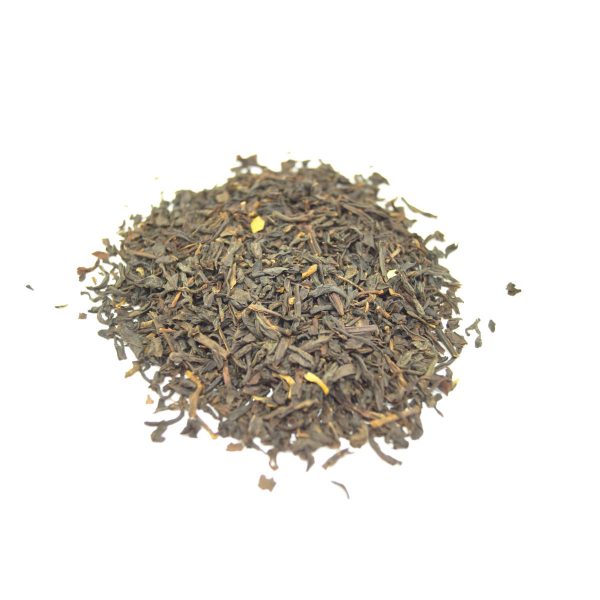
When we first introduced our Dark Tea, or Pu-erh, to our customers… it took some time to become popular due to its unique taste and dark, rich flavor… but now there isn’t a day when we don’t introduce it to someone, and they love it. The loose Dark Tea from Yunnan Province in China is aged through microbial fermentation. We sell the Ripe (or shou) Pu-erh, and it pairs well with many of our additions. What is Pu-erh? It is made from the Camellia sinensis plant, the same source as green, oolong, and black teas. Unlike other teas, Pu-erh undergoes microbial fermentation and aging, giving it a deep, earthy taste and probiotic qualities—at times earthy and woody, sometimes sweet—often compared to aged wine or mushrooms. Traditionally sold as compressed “tea cakes” but also available as loose leaves like this blend. Why drink Pu-erh? Weight Loss ~ Pu-erh may reduce fat synthesis and increase fat burning. Cholesterol Support ~ Pu-erh may lower LDL (“bad” cholesterol) and increase bile acid excretion, reducing fat absorption. Gut Health ~ Fermentation introduces probiotics that support healthy gut flora, digestion, and blood sugar control. Cardiovascular Protection ~ Rich in antioxidants (gallic acid, catechins, flavonoids) that may reduce inflammation and protect blood vessels. Why the unique shape? Tuocha, also known as “dome-shaped bowl tea,” is a tightly compressed tea. It is made from loose raw pu-erh tea (also called ‘maocha’) or pile-fermented maocha. The tuocha shape resembles a bird’s nest. The convex shape of tuocha allows the tea to dry out better during processing. Tuocha originates from Yunnan province in China, known as the birthplace of tea. The 26 ethnic groups living in Yunnan cultivate and enjoy tea in their unique ways. The never-extinguished fire pits in Yunnan households, the rest stops along the postal road and mule caravans, and the clear mountain springs – all carry the unique aroma of Yunnan tea. Tuocha is one of the famous shapes among compressed pu-erh tea. It takes root in the land of Huaxia and originated in Xiaguan, Yunnan. It has a history of over 100 years since its debut. As early as 1902, tea merchants in Xiaguan began researching and developing tuocha, based on a Song Dynasty tea called “Tuancha.” It was successfully finalized in 1917, with a unique shape resembling a bowl-shaped mortar. It’s still unclear how tuocha officially got its name. Some say people in Yunnan habitually refer to round, non-flat objects as “tuo.” Others believe it’s mainly due to the association with the Tuojiang River. It’s said that when tuocha is brewed with water from the local Tuo River, it results in excellent flavor and aroma. It’s likely a combination that gradually led to the term ‘tuocha’ being accepted as the official term for dome-shaped pu erh tea. Moreover, the association with the Taijiang River and the Xiaguan tea factory greatly enhanced the tea’s reputation. The molding process involves skilled tea masters who press the leaves into cloth-lined molds. Unlike cakes, no bamboo backing is used. This technique dates back to the Tang Dynasty, making it one of the oldest puerh compression methods. Many collectors prize vintage tuochas for their balanced aging characteristics and distinctive taste profile. Ripe tuocha pu erh tea also has a bowl-shaped appearance with a tight, neat structure, a reddish-brown color, a strong, red soup color, an aged, fragrant aroma, and a mellow, smooth taste. The taste is mellow, refreshing, and lingering, and the tea leaves are tender and evenly distributed, allowing for long-lasting steeping. Exploring the Different Shapes of Pu Erh Tea: Cakes, Bricks, and Tuoch – Cspuerh (Chen Sheng Hao)
The Kandy region of Sri Lanka stands as a sanctuary for tea enthusiasts, offering a unique blend of history, culture, and breathtaking landscapes. Renowned worldwide, Kandy has played a pivotal role in shaping the legacy of Ceylon tea. The Historical Roots of Tea in Kandy ~ The story of tea in Kandy dates back to the 19th century, during the British colonial era. It was during this period that numerous tea plantations were established, marking the beginning of Kandy’s journey as a significant contributor to the global tea market. Before the introduction of tea, the local economy was primarily agricultural. However, the advent of tea cultivation transformed the region, as Kandy’s fertile soil and favorable climate proved to be ideal for growing tea. This development propelled Kandy into international prominence, making it synonymous with high-quality Ceylon teas. Cultural and Economic Significance ~ Kandy’s reputation for producing exceptional Ceylon tea extends beyond economics; the tea plantations are deeply woven into the region’s cultural fabric. These plantations are not only vital sources of livelihood but also serve as enduring symbols of the region’s rich history and traditions. Characterized by lush greenery, rolling hills, and the fragrant air of tea bushes, the plantations form an iconic landscape that defines Kandy. Nayapane Estate FBOP: A Distinctive Ceylon Tea ~ Among the notable teas produced in Kandy is the FBOP (Flowery Broken Orange Pekoe) variety from Nayapane Estate. This high-quality grade of black tea is distinguished by its slightly wiry, twisted broken leaves, often interspersed with silvery tips. Known for its quick brewing time and rich aromatic profile, FBOP yields a mellow, flavorful reddish liquor. Appreciated for its robust character, this tea is versatile—enjoyed both plain and sweetened—and remains a favorite among tea drinkers.
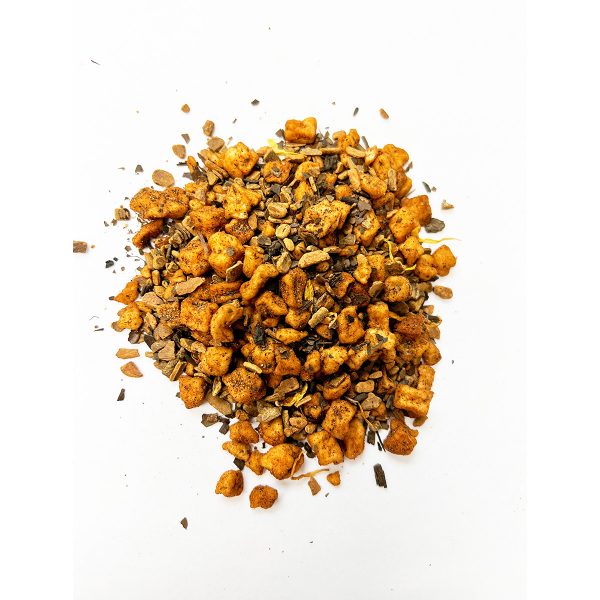
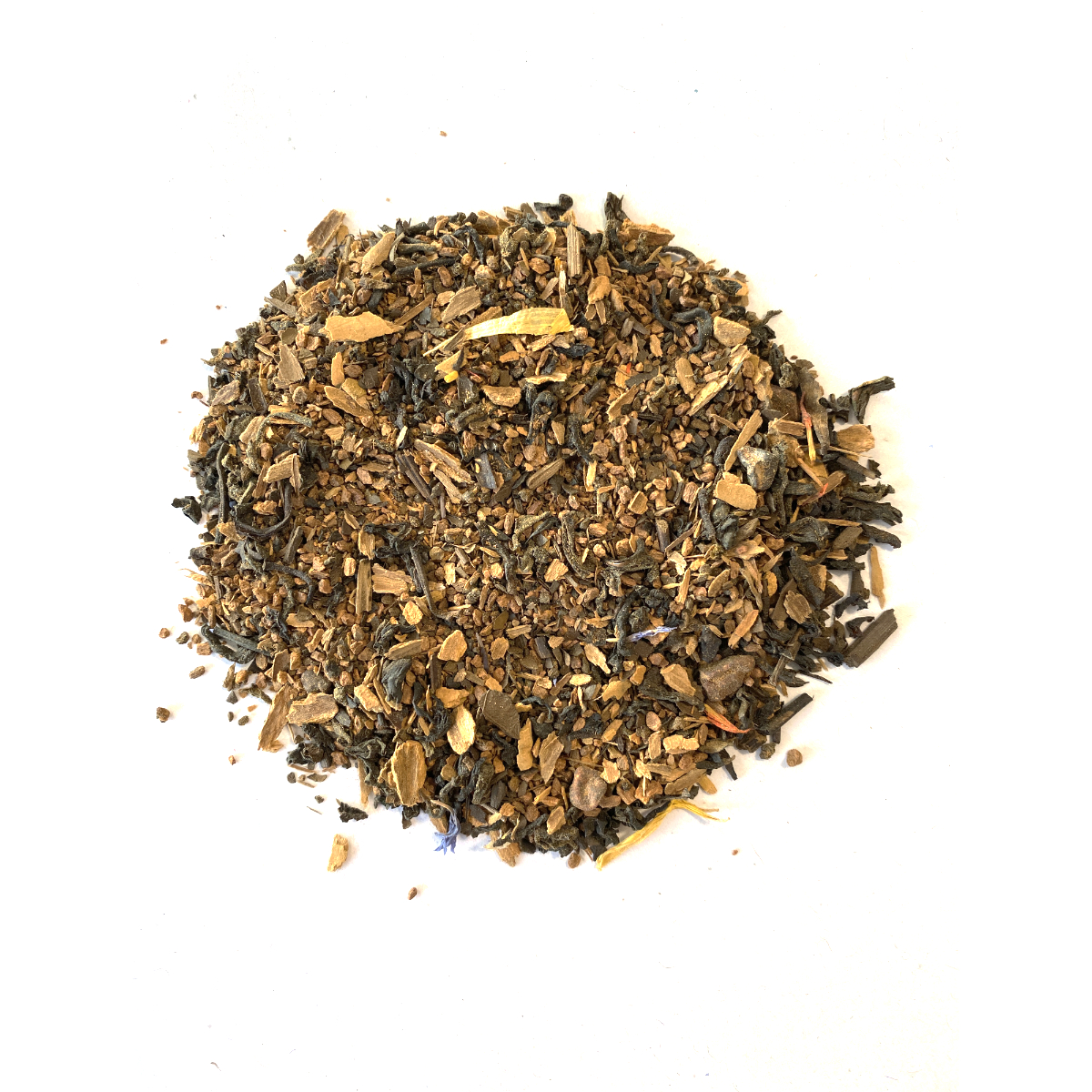
We then blended a proprietary combination of cinnamon chips, cinnamon sticks, and cinnamon granules from three different countries to create the perfect hot-and-tot cinnamon taste. All-natural and tastes great with this strong base of teas.
Features Cinnamon Dolce:
- Leaves can be infused twice (Double the tea for same price!)
- Robust Blend making a nice colour and strong flavor
- Rich and Full Bodied ~ Steep 10 Minutes for best flavor
- Dark Dark Colour Cup of Tea
- Full of natural antioxidants and Flavor ~ Energy Producer
- Sample Size ~ 1 oz will make 8-10 ~ 16 oz teas
- Sealed Bag ~ 4 oz will make 32-40 ~ 16 oz teas
- Iced Tea ~ Always Double the amount of Tea for the same size cup!
- Per Serving ~ 1 tsp per 6 oz of H2O
- Caffeine: Medium
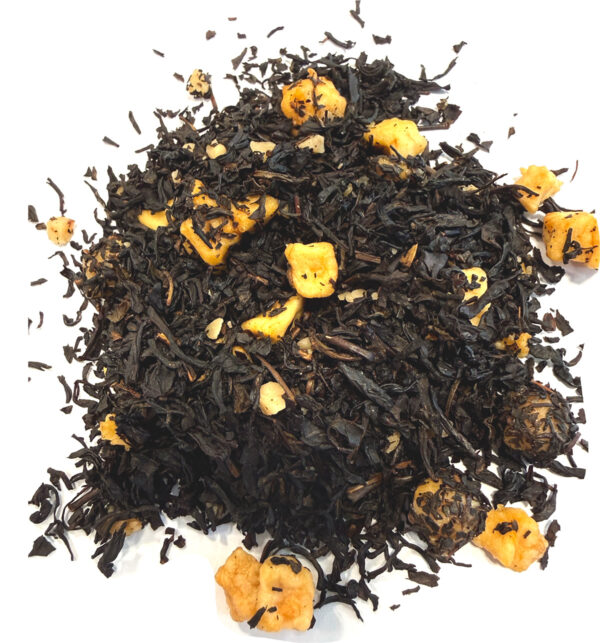
Ingredients: Steep Me Proprietary Organic Blend of Shou (ripe) Pu-erh Tea from Yunnan Province in China, aged by Microbial Fermentation. These whole, uncompressed tea leaves give a unique flavor and aroma, Roasted Yerba Mate is part of a holly plant called the Ilex Paraguariensis plant that is indigenous to South America with a roasted flair, Black Tea from Nayapane Estate is in the Uda Pusselawa region at an elevation of around 3,000 feet in the central highlands of Sri Lanka with Cocoa Nibs, Super Cream Mini Caramel Chips, Chicory Root & Steep Me Cinnamon Blend with the Highest Quality Vanilla Essential Oil.
CONTAINS: MILK ~NUTS(Hazelnut)
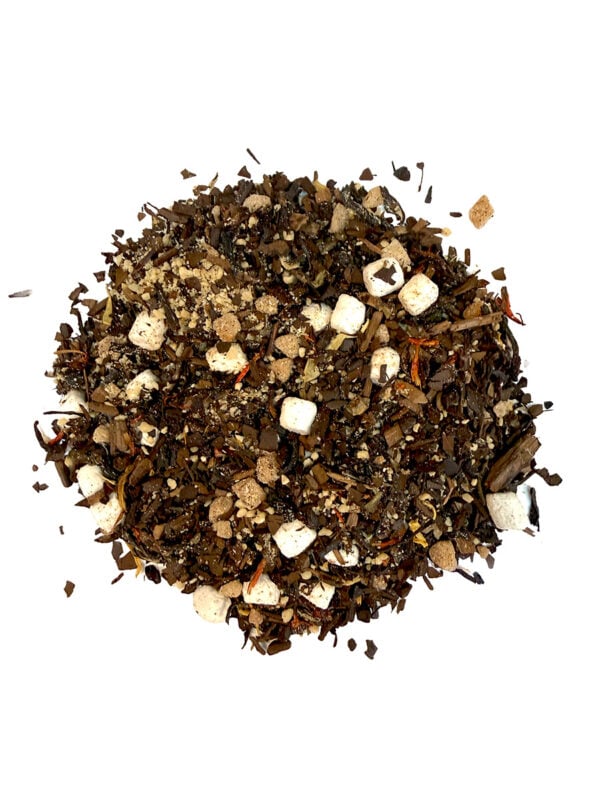
Alternatively, try our S’mores Chai Black Tea OR Cinnamon Orange Spice Black Tea.
Great reasons why black tea is healthy and a great beverage option. https://www.thespruceeats.com/black-tea-benefits-765048
Why Cinnamon is great for everyday health! https://www.healthline.com/nutrition/10-proven-benefits-of-cinnamon#:~:text=At%20the%20end%20of%20the,re%20using%20the%20Cassia%20variety.
“Processed in a facility that also processes food containing milk, egg, fish, peanut, shellfish, soy, tree nuts, wheat, and sesame. May contain traces of milk, egg, fish, peanut, shellfish, soy, tree nuts, wheat, and sesame.”
Additional information
| Weight | 6 oz |
|---|---|
| Size | 1 oz sample bag, 1/2 # Bulk Bag, 4oz Sealed Bag |