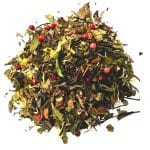

Rejoice to Thee
A fun variation of our Classic Puerh with a hint of fruity and a bit of winter spice!
Description
Limited Supply Christmas Tea
Blender’s Notes Rejoice to Thee:
When we first introduced Dark Tea, or Pu-erh, to our customers, we’ll admit it took a little explaining. Pu-erh doesn’t walk into the room quietly pretending to be another black tea. It has personality. Dark, rich, earthy, and wonderfully different, it was one of those teas customers weren’t quite sure about…until they tasted it. Now, not a day goes by without us introducing someone new to Pu-erh, and watching that first uncertain sip turns into “Oh…I like this!” has become one of our favorite things. And perhaps that’s fitting, because Pu-erh itself has never been an ordinary tea. Pu-erh comes from Yunnan Province in southwestern China and is traditionally produced from the large-leaf Yunnan variety of Camellia sinensis, the same tea species behind the familiar families of green, white, oolong, and black tea. What sets Pu-erh apart is microbial fermentation. While many changes in other tea styles come primarily from oxidation, microorganisms truly transform Pu-erh. Two major styles exist: sheng, or raw Pu-erh, which traditionally develops gradually with age, and shou, or ripe Pu-erh, the style we use. Ripe Pu-erh undergoes an accelerated process commonly known as wet-pile fermentation, producing the wonderfully dark, mellow, earthy character shou is known for. This modern method was developed in the 1970s to accelerate some of the transformations associated with aged Pu-erh. In the cup, ripe Pu-erh can be deep, smooth, and earthy, sometimes suggesting wood, forest floor, dried fruit, or gentle sweetness. Think less “ordinary cup of tea” and more “old apothecary cupboard in the very best possible way.” That’s what makes it so much fun to blend.
Pu-erh has a long relationship with compressed tea. Pressing made tea more compact for storage and transportation, an important consideration when tea from Yunnan traveled by horse and mule along historic trade routes. One of its most charming forms is the tuocha, a little compressed dome with a hollow underneath that looks something like a tiny bowl or bird’s nest. Pu-erh also appears as round cakes, rectangular bricks, small nests, and loose leaf. Interestingly, the shape doesn’t determine whether the tea is raw or ripe. The same leaf can be pressed into different forms, and compression mainly affects how conveniently it can be stored, transported, portioned, and how quickly it may change with age. It’s a wonderfully visible reminder that with Pu-erh, tea isn’t simply something you drink. It’s something people have transported, stored, collected, aged, and shared for generations.
Because one storied tea apparently wasn’t enough for us.
Into the earthy richness of our Pu-erh comes Nayapane Estate FBOP Ceylon black tea from Sri Lanka’s historic Kandy tea-growing region. And Kandy has quite a tea story of its own. Commercial Ceylon tea history took a defining turn there in 1867, when Scottish planter James Taylor established a 19-acre commercial tea planting at Loolecondera Estate. As coffee disease devastated Sri Lanka’s once-thriving coffee industry, tea cultivation expanded dramatically, beginning the remarkable rise of Ceylon tea. The Kandy region is classified as medium-grown tea country, and its teas are known for a rich body and deep, copper-colored liquor. Our Nayapane Estate FBOP comes from near Pussellawa in that region, at roughly 3,000 feet elevation. On its own, Nayapane FBOP produces a bright reddish cup with a mellow character, medium body, slight maltiness, and astringency. And FBOP stands for Flowery Broken Orange Pekoe, the grade of this beautiful Ceylon black tea. So now we have quite a foundation.
The Pu-erh brings the dark, earthy depth. The Ceylon black tea brings brightness, body, and gentle maltiness—a Christmas Twist. And then, because this is Steep Me at Christmastime, we couldn’t possibly leave all that respectable tea history alone. We take the deep, earthy character of our ripe Pu-erh and the mellow richness of Nayapane Estate Ceylon black tea, then pile on the flavors of the season. Vanilla, caramel, and chocolate soften those darker tea notes into something rich and almost dessert-like. Mango and pineapple bring an unexpected little burst of fruit, while hibiscus brightens the cup and carrot lends its own gentle earthy sweetness.
Then Christmas walks through the apothecary door. Cinnamon, cloves, ginger, and nutmeg mingle with darker vanilla, chocolate, and caramel notes, creating an aroma that feels wonderfully familiar. Think holiday baking, spice cupboards opened on Christmas morning, something sweet in the oven, and a kettle already beginning to sing. What makes this blend so interesting, though, is what’s underneath all that Christmas cheer. The ripe Pu-erh still gives you that unmistakably deep, smooth, earthy foundation, while the Nayapane Estate FBOP brings a brighter, fuller Ceylon-tea character. Nayapane comes from Sri Lanka’s historic Kandy tea-growing region and is known for a bright reddish liquor, medium body, mellow character, and slight maltiness. Meanwhile, ripe Pu-erh gets its wonderfully dark personality from microbial wet-pile fermentation, a modern Pu-erh technique developed in the 1970s. So, this isn’t your ordinary sweet Christmas tea. It’s dark and earthy, fruity and creamy, chocolatey and warmly spiced, with little surprises revealing themselves from sip to sip—vanilla and caramel round the edges. Chocolate deepens the richness. Mango, pineapple and hibiscus keep things lively. And cinnamon, clove, ginger, and nutmeg bring everybody home for Christmas.
Earthy Pu-erh • Mellow Ceylon Black Tea • Vanilla • Caramel • Chocolate • Mango • Pineapple • Bright Hibiscus • Cinnamon • Clove • Ginger • Nutmeg • Christmas Spice
It’s a little bit Yunnan, a little bit Kandy, and a whole lot of Christmas at the Steep Me Tea Apothecary.
Features Rejoice to Thee:
- Leaves can be infused twice (Double the tea for the same price!)
- Leaves can be long soaked, giving it an even richer flavor
- Earthy and Woodsy ~ Smooth Taste
- Dark, Dark Colour Cup of Tea
- Full of natural Antioxidants ~ Prebiotic and Metabolism Booster
- Sample Size ~ 1 oz will make 8-10 ~ 16 oz teas
- Sealed Bag ~ 4 oz will make 32-40 ~ 16 oz teas
- Iced Tea ~ Always double the amount of Tea for the same size cup!
- Per Serving ~ 1 tsp per 6 oz of H2O
- Caffeine: Low
Ingredients: Steep Me Proprietary Organic and Wildcrafted blend of Dark Tea from Yunnan Province in China, aged by Microbial Fermentation, Sri Lankan Ceylon Black Teas with Hibiscus, Freeze-Dried Mango, Freeze-Dried Pineapple, with 72% Cacao Mini Chips & Bits of Cacao, Ginger Root, Super Cream Mini Caramel Chips, Nutmeg & Rubbed Cloves
CONTAINS: MILK
Alternatively, try our Let it Snow Black Tea OR Away in the Manger Black Tea
Why Puerh is such an integral part of your Phyto nutrition….http://blog.tutorming.com/expats/what-is-puer-tea-and-why-is-it-a-big-deal
Great reasons to add pu-erh to your lifestyle, and why Breakfast Berry Pu-erh Tea is a great choice. https://www.healthline.com/health/food-nutrition/pu-erh-tea-benefits
Additional information
Benefits
Related products
New
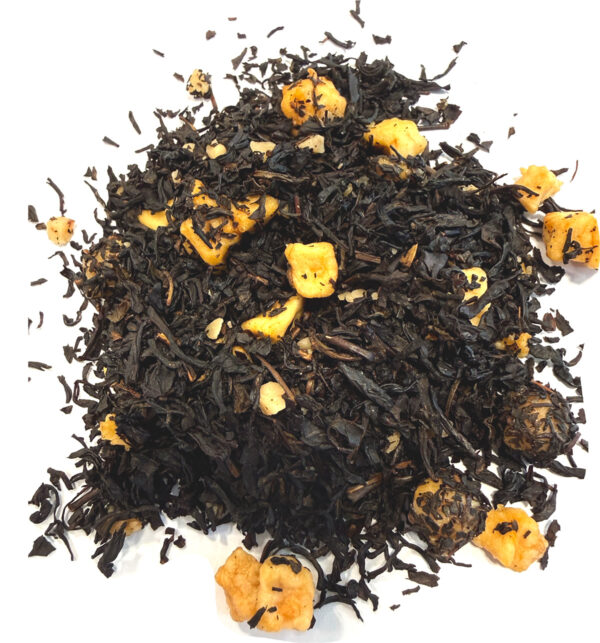
Apple Harvest
To celebrate autumn's warmth, we’ve paired our Keemun Mao Feng with dried Fuji apple, caramel bits, and toffee pieces. The result is a cozy, lightly sweet blend that feels like crisp fall air, turning leaves, and sweater weather in a cup. The natural apple notes melt beautifully into Keemun’s malty base, while the caramel and toffee add a soft dessert‑like finish without overwhelming the tea’s elegance.


New



Sugar Plum
This is the cup for twinkling Christmas lights, beautifully wrapped presents, old-fashioned candy dishes, and visions of sugar plums dancing through your head. And perhaps that's what we love most about Sugar Plum Christmas Tea. Underneath all the Christmas whimsy is a beautiful Ceylon black tea with more than a century and a half of tea history behind the region from which it comes. But once it reaches our apothecary? We add the sugar plums. Because some Christmas traditions deserve to be steeped. 🎄🫖✨