
New

Dirty Earl ~ Coffee ~ Earl Grey
From: $13.00
Perfect combo of Coffee and Black Tea and Chai! with a kick in the pants with the Freeze-Dried Coffee! Vroom! Vroom!
Description
Blenders Notes Dirty Earl ~ Coffee ~ Earl Grey:
What is Earl Grey? Earl Grey is a wonderful combination of teas paired with Bergamot Oil and Orange Peel makes this a traditional favorite and really defines what an “Earl Grey” can be. Bergamot Oil comes from the rind of the bergamot orange, and it is a bright citrus taste with a slightly bitter, aromatic peel character and a gentle floral lift. You’ll get a clean, perfumed zest—think somewhere between lemon and bitter orange—layered over whatever tea’s texture happens to be. It often carries a subtle lavender-like nuance and a faint peppery edge from the bergamot. The intensity can vary by brand, but the unmistakable signature is a lively, citrus-floral aroma with a smooth, lingering finish. While many tea houses will carry a version of Earl Grey, they will vary in taste due to the variations in the teas used for the blend and the quality of the bergamot oil. We used a traditional blend of Wildcrafted teas from Sri Lanka and China and the highest quality of Bergamot Oil. We then add the addition of our orange peel giving it a great look and a fuller and richer orange taste.
A traditional black tea named after Assam, India. Assam tea is now mostly grown at or near sea level and is known for its body, briskness, malty flavour, and strong, bright colour. Assam teas, or blends containing Assam tea, are often sold as “breakfast” teas. The state of Assam is the world’s largest tea-growing region by production, lying on either side of the Brahmaputra River, and bordering Bhutan, Bangladesh, Myanmar and very close to China. The tea plant is grown in the lowlands of Assam, unlike Darjeelings and Nilgiris, which are grown in the highlands. It is cultivated in the valley of the Brahmaputra River, an area of clay soil rich in the nutrients of the floodplain. The climate varies between a cool, arid winter and a hot, humid rainy season—conditions ideal for growing tea. Because of its long growing season and generous rainfall, Assam is one of the most prolific tea-producing regions in the world.
Yerba Mate is not a part of the standard Camellia Sinensis plant but from a holly plant called the Ilex Paraguariensis plant that is indigenous to South America. Yerba Mate comes in two versions – Green (non-roasted) Yerba Mate or Dark (Roasted) Yerba Mate, both coming from the same plant but different types of processing. Our Roasted Yerba Mate is a medicinal herb that share many common health attributes to the tea plant. Plus, it has a dark and rich flavor that is similar to coffee. For many coffee lovers this is a great tea to transition to without all the stomach and caffeine concerns.
Yerba mate is a South American drink brewed from dried leaves and twigs of the holly genus plant, with the botanical name Ilex paraguariensis. Yerba mate grows as a shrub or small tree that can reach up to 15 meters high. This evergreen tree is a species of holly that produces small greenish white four petal flowers and a red berry. When the yerba mate leaves and twigs are brewed, the tea is similar to green tea. It is said to be best brewed in hot, not boiling, water. Yerba mate has become known as the national drink of Brazil, Paraguay, and Argentina.The rich tea is said to be a stimulating herbal beverage. Some use it to replace coffee with its ability to wake up the mind without the adverse effects of coffee. Known in some areas of South America as “The Drink of the Gods”, yerba mate is thought to possess a host of health benefits. Most of which help prolong life. The history of Yerba Mate can be traced back to the semi-nomadic Guarani people of southern Brazil, northern Argentina and Paraguay. These forest nomads are said to be the earliest known people to harvest and drink the stimulating yerba mate beverage. Legend has it that the Guarani believe the yerba mate tree to be a gift given to a group of weary travelers by a benevolent god as a reward for their righteousness. This legend eventually carried on giving yerba mate tea its “Drink of the Gods” nickname. The Guarani were said to use yerba mate as a daily tonic for health. They gather around a fire to socialize and pass around the gourd of yerba mate. This ancient custom of drinking yerba mate from a gourd became a tradition. Even today it continues to be a daily habit of the people now living in this area. Yerba mate also became a central part of their system of medicine and healing. The tea became an important part of spiritual rituals. It also served as currency for them when trading with the Incas and Charruas. In the sixteenth century, Spanish conquistadores arrived in Argentina. When they arrived, they discovered the native people drinking their gourd of yerba mate tea. The Spaniards enjoyed this stimulating drink. They persuaded the people to teach them how to brew their own yerba mate tea. As demand for yerba mate started to rise, the Jesuits decided to begin harvesting and cultivating it on yerba mate plantations. By the 1600’s they had discovered a way to germinate yerba seeds. As a result, their plantations flourished and expanded the consumption of yerba mate into Ecuador. But in 1767, the Jesuits were expelled. And with it, all of their knowledge on the cultivation of yerba mate was expelled along with them. Forest harvesting continued until the early 20th century. As a result, the secret to yerba mate seed germination was discovered once again and plantation cultivation was once again a reality. Today, plantation cultivation of yerba mate continues in parts of Argentina, Brazil, Uruguay, and Paraguay. The custom of cultivation has remained pretty much unchanged, and the custom of drinking yerba mate tea has gone global. In many areas of South America, yerba mate tea is still a social ritual and people continue to drink it for its taste and the way it makes them feel. What Is Yerba Mate? And the History of Yerba Mate Amigofoods
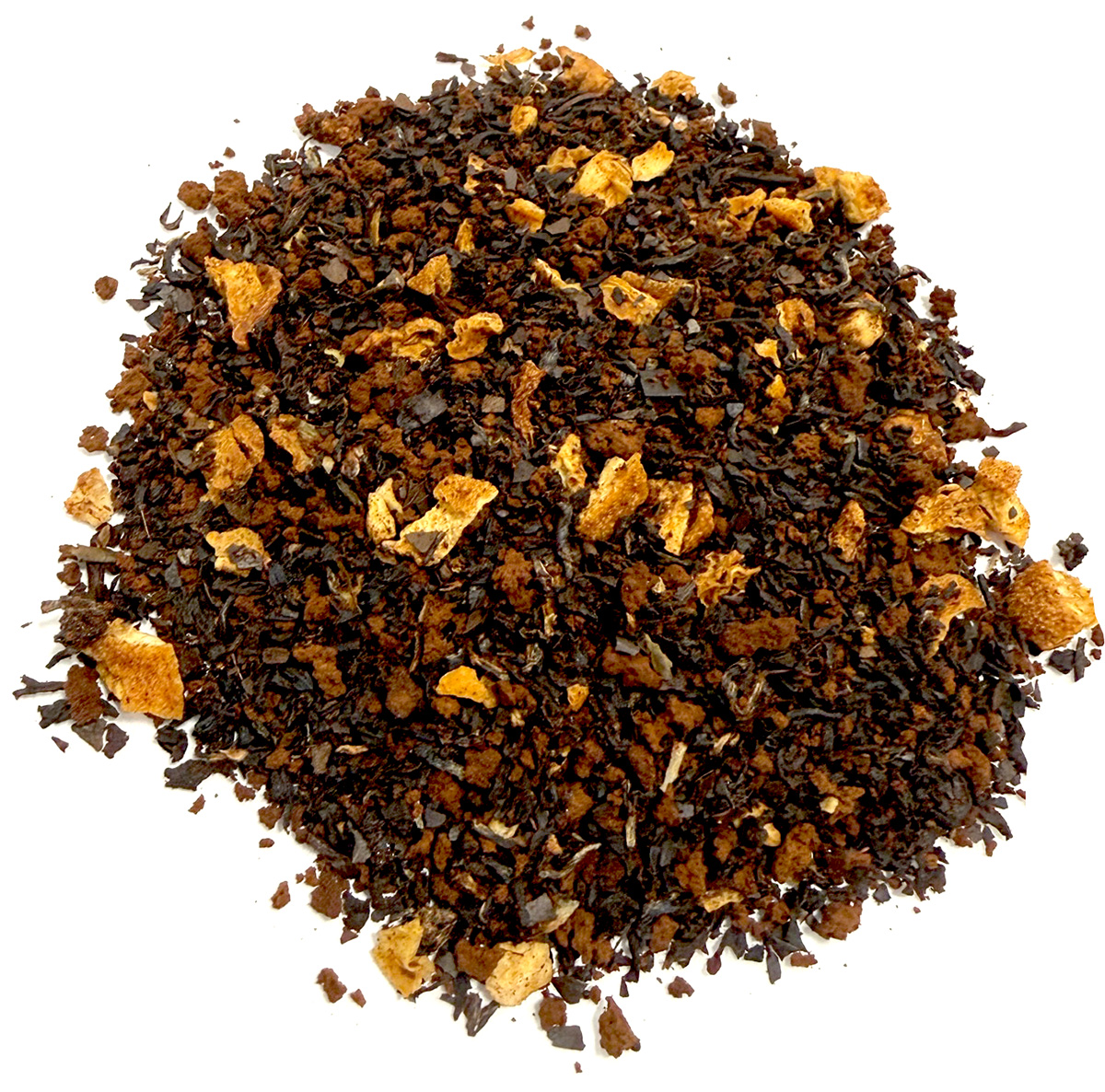
We made the perfect combo of Black Tea ~ Freeze-Dried Coffee and all thing Earl Grey! Besides the usual ingredients of Earl Grey, in this blend we added Roasted Yerba Mate and Freeze-Dried Coffee – taking a fun and full-bodied twist on Earl Grey! Check it out…a fun addition to your Earl Grey collection.
Features Dirty Earl ~ Coffee ~ Earl Grey
- Robust Blend making a dark colour and strong flavor – so yummy!
- Rich and Full Bodied ~ Can be Long Steeped for More Chai Taste
- Dark Dark Colour Cup of Tea/Coffee
- Full of natural antioxidants and Flavor ~ Energy Producer
- Sample Size ~ 1 oz will make 8-10 ~ 16 oz teas
- Sealed Bag ~ 6 oz will make 48-60 ~ 16 oz teas
- Per Serving ~ 1 tsp per 6 oz of H2O
- Caffeine: Lots
Ingredients: Organic: A Superior Orthodox GBOP Black Tea from the Assam Valley south of the river Bramaputhra – The Hathikuli Tea Estate with a malty, slightly bread-like flavour in the cup with a strong and spicy scent with Roasted Yerba Mate is not a part of the standard Camellia Sinensis plant but from a holly plant called the Ilex Paraguariensis plant that is indigenous to South America. This Steep Me Proprietary Organic and Wildcrafted Blend has the addition of Freeze-Dried Arabica Coffee, Lemon Peel Pieces, Orange Peel Pieces with the Highest Quality Bergamot Essential Oil
Alternatively, try our Jasmine Earl Grey Black Tea OR Earl Grey White Tea OR Scottish Earl Grey Black Tea OR Madam Earl Grey Decaf Black Tea OR Earl Grey Supreme Rooibos Tea OR Ukraine Earl Grey Black Tea OR Lavender Earl Grey Black Tea OR Madam Earl Grey Black Tea OR Berry Tart Earl Green Tea OR Earl Grey Supreme Black Tea OR KooKoo Grey Puerh Tea OR Cocoa Sun Kiss Black Tea
How great is Freeze-Dried Coffee!!! The Surprising Health Benefits Of Freeze Dried Coffee: What You Need To Know – Karock’s Foods
Additional information
| Weight | 4 oz |
|---|---|
| Size | 1 oz sample bag, 1/2 # Bulk Bag, 4oz Sealed Bag |
Benefits