
Runner’s High
From: $15.00
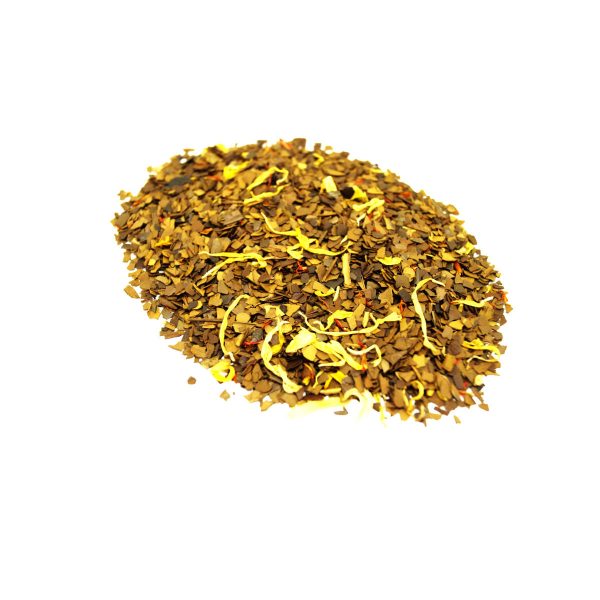
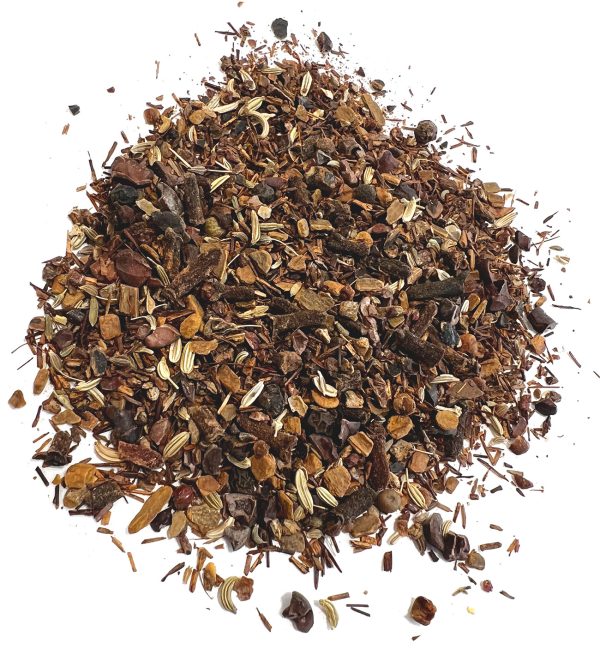
Looking for a great higher caffeine chocolatey caramely roasted mate….this is your baby…so yummy!
Description
Blenders Notes Runner’s High:
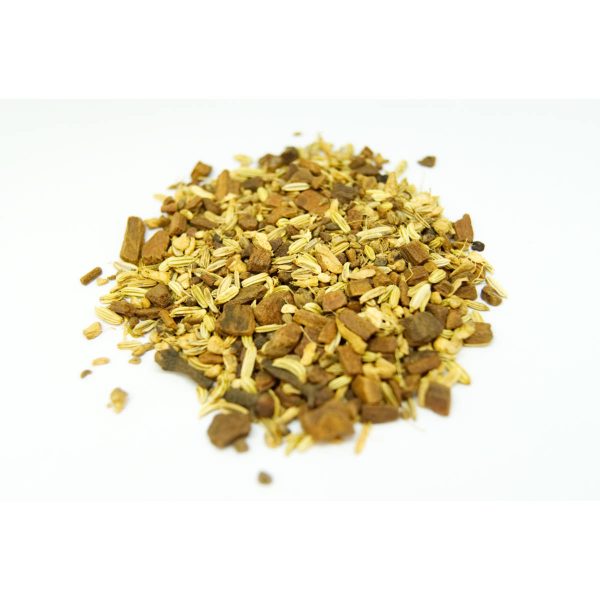
What is Chai? Chai is tea with a personality upgrade. Instead of plain leaves in hot water, its black tea dressed up with milk, sweetener, and a spice squad—ginger for zing, cardamom for sweetness, cinnamon for warmth, and cloves for depth. Any many other add-ins to make each blend take on its own personality. Basically, it’s tea that decided to throw a block party in your mug. People love it because it is ~ Creamy and cozy, but with enough spice to wake up your senses ~ In many countries chai isn’t just a drink—it’s how people connect, gossip, and pause life for a moment ~ Many places have turned Chai into the “chai latte,” but at its core, it’s still the same spiced hug in a cup!! What is Chai…In America – this specialized blend has become known as a “taste” of tea with predominantly cinnamon or cardamom notes and pairs well with dairy. Cardamom is the most common ingredient, followed by some mixture of cinnamon, ginger, star anise and cloves. Pepper, coriander, nutmeg and fennel are also used, but they are slightly less common.
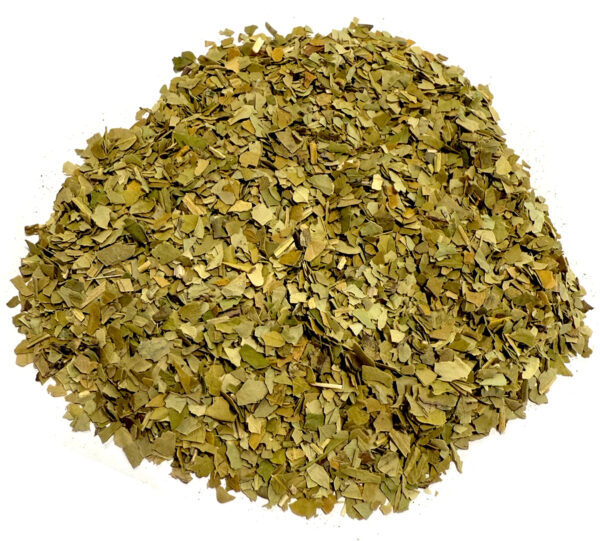
Yerba Mate is not a part of the standard Camellia Sinensis plant but from a holly plant called the Ilex Paraguariensis plant that is indigenous to South America. Yerba Mate comes in two versions – Green (non-roasted) Yerba Mate or Dark (Roasted) Yerba Mate, both coming from the same plant but different types of processing. Our Roasted Yerba Mate is a medicinal herb that share many common health attributes to the tea plant. Plus, it has a dark and rich flavor that is similar to coffee. For many coffee lovers this is a great tea to transition to without all the stomach and caffeine concerns. Yerba mate is a South American drink brewed from dried leaves and twigs of the holly genus plant, with the botanical name Ilex paraguariensis. Yerba mate grows as a shrub or small tree that can reach up to 15 meters high. This evergreen tree is a species of holly that produces small greenish white four petal flowers and a red berry. When the yerba mate leaves and twigs are brewed, the tea is similar to green tea. It is said to be best brewed in hot, not boiling, water.Yerba mate has become known as the national drink of Brazil, Paraguay, and Argentina.The rich tea is said to be a stimulating herbal beverage. Some use it to replace coffee with its ability to wake up the mind without the adverse effects of coffee. Known in some areas of South America as “The Drink of the Gods”, yerba mate is thought to possess a host of health benefits. Most of which help prolong life. The history of Yerba Mate can be traced back to the semi-nomadic Guarani people of southern Brazil, northern Argentina and Paraguay. These forest nomads are said to be the earliest known people to harvest and drink the stimulating yerba mate beverage. Legend has it that the Guarani believe the yerba mate tree to be a gift given to a group of weary travelers by a benevolent god as a reward for their righteousness. This legend eventually carried on giving yerba mate tea its “Drink of the Gods” nickname. The Guarani were said to use yerba mate as a daily tonic for health. They gather around a fire to socialize and pass around the gourd of yerba mate. This ancient custom of drinking yerba mate from a gourd became a tradition. Even today it continues to be a daily habit of the people now living in this area. Yerba mate also became a central part of their system of medicine and healing. The tea became an important part of spiritual rituals. It also served as currency for them when trading with the Incas and Charruas. In the sixteenth century, Spanish conquistadores arrived in Argentina. When they arrived, they discovered the native people drinking their gourd of yerba mate tea. The Spaniards enjoyed this stimulating drink. They persuaded the people to teach them how to brew their own yerba mate tea. As demand for yerba mate started to rise, the Jesuits decided to begin harvesting and cultivating it on yerba mate plantations. By the 1600’s they had discovered a way to germinate yerba seeds. As a result, their plantations flourished and expanded the consumption of yerba mate into Ecuador. But in 1767, the Jesuits were expelled. And with it, all of their knowledge on the cultivation of yerba mate was expelled along with them. Forest harvesting continued until the early 20th century. As a result, the secret to yerba mate seed germination was discovered once again and plantation cultivation was once again a reality. Today, plantation cultivation of yerba mate continues in parts of Argentina, Brazil, Uruguay, and Paraguay. The custom of cultivation has remained pretty much unchanged, and the custom of drinking yerba mate tea has gone global. In many areas of South America, yerba mate tea is still a social ritual and people continue to drink it for its taste and the way it makes them feel. What Is Yerba Mate? And the History of Yerba Mate Amigofoods
Keemun tea, also known as Qimen tea, is a premium variety of Chinese black tea hailing from the Anhui province. This tea is renowned for its unique and complex flavor profile, making it a favorite among tea connoisseurs around the world. First produced in the late 19th century, it quickly became popular in the West and is still used for a number of classic blends. It is a light tea with characteristic stone fruit and slightly smoky notes in the aroma and a gentle, malty, non-astringent taste reminiscent of unsweetened cocoa. Keemun is said to have floral aromas and wooden notes but can be long soaked for tons of flavor. Among the many varieties of Keemun perhaps the most well-known is Keemun Mao Feng (祁門毛峰). Harvested earlier than others, and containing leaflets of two leaves and a bud, it is lighter and sweeter than other Keemun teas which is the variety we carry.
Production Process of Keemun Tea ~ Harvesting and Withering ~ The process of producing Keemun tea begins with the careful selection of tea leaves. Typically, the small, tender leaves from the tea plant (Camellia sinensis) are hand-picked in the early morning. Once collected, the leaves are spread out in a thin layer to wither under the sun or in a well-ventilated room. This step reduces the moisture content of the leaves, making them more pliable and easier to process.
Rolling and Oxidation ~ After withering, the leaves are gently rolled by hand or machine to release the tea’s natural enzymes and essential oils. Rolling also helps to shape the leaves, giving Keemun tea its characteristic twisted appearance. The rolled leaves are then left to oxidize, turning from green to a rich, dark brown color. The level of oxidation determines the final flavor of the tea, with a longer oxidation time resulting in a more robust and full-bodied taste.
Firing and Drying ~ Once the desired level of oxidation is reached, the leaves are fired to halt the oxidation process. This step is crucial in preserving the unique flavor profile of Keemun tea. The leaves are then dried, either in the sun or using specialized machines, to remove any remaining moisture. Finally, the dried leaves are sorted and packaged for sale.
What Does Keemun Tea Taste? Keemun tea is prized for its rich and complex flavor profile. The tea boasts a combination of fruity, floral, and smoky notes, with a hint of sweetness. The liquor produced when brewing Keemun tea is a beautiful reddish-brown color, and the aroma is often compared to the fragrance of orchids or roses.
Health Benefits of Keemun Tea ~ Like other black teas, Keemun tea contains a variety of antioxidants and beneficial compounds that contribute to overall health. Some potential health benefits of Keemun tea include Boosting the Immune System ~ The antioxidants in Keemun tea, particularly catechins and theaflavins, help to protect the body against free radicals and support a strong immune system. Improving Heart Health ~ Regular consumption of black tea, including Keemun tea, has been linked to a reduced risk of developing heart disease due to its antioxidant properties and positive effects on blood pressure and cholesterol levels. Enhancing Cognitive Function ~ The combination of caffeine and L-theanine found in Keemun tea has been shown to improve alertness, focus, and overall cognitive function. Keemun Tea: Taste, Benefits, and How to Make It | Chinese Teas 101
When we first introduced our Dark Tea or Puerh (pronounced POO-ar) to our customers…it took some time to become popular due to its unique taste, and dark and rich flavor…but now there isn’t a day where we don’t introduce it to someone, and they love it. The loose Dark Tea from Yunnan Province in China is aged by Microbial Fermentation. We sell the Ripe or Shou Puerh and it pairs well with many of our additions. What is Puerh? It is made from the Camellia sinensis plant, the same source as green, oolong, and black teas. Unlike other teas, Puerh undergoes microbial fermentation and aging, giving it a deep, earthy taste and probiotic qualities – at times it is earthy, woody, sometimes sweet — often compared to aged wine or mushrooms. Traditionally sold as compressed “tea cakes” but also available as loose leaf. The origins of Puerh tea date back to the Yunnan province of China, where it was initially produced as early as the Tang dynasty (618–907 AD). It gained popularity among traders and travelers along the ancient Tea Horse Road, a crucial trade route that connected Yunnan with Tibet, India, and beyond. Originally, Puerh was made from older tea trees, known for their wild characteristics. Over centuries, the fermentation process evolved, giving rise to two distinct types: Sheng (raw) and Shou (ripe) Puerh. The method of loose leaf production became prominent as tea enthusiasts began to appreciate the art of brewing using whole leaves, leading to variations in flavor and aroma. By the 20th century, loose Puerh tea garnered significant attention in the Chinese tea market, especially as interest in traditional teas grew. Its unique aging qualities and complex flavor profile helped establish it as a sought-after tea both domestically and internationally. Today, loose Puerh remains a beloved choice among tea aficionados, celebrated for its cultural significance and rich history. Puerh loose tea consists of whole, uncompressed tea leaves, allowing for a wide variety of flavors and aromas based on the quality of the leaves and their processing methods. This format often requires precise measuring and specific brewing techniques, thus providing a more artisanal experience. The flavors can vary greatly, influenced by steeping time and temperature. Loose Puerh tea is renowned for its unique flavors, aromas, and texture. It offers a range of characteristics. The taste can vary widely, often described as earthy, rich, and sometimes sweet. The flavor can evolve with aging, becoming more complex over time. The aroma of loose Puerh is typically rich and robust, with notes that can include woodiness, herbal qualities, and hints of fermentation. The brewed tea can vary in color from deep amber to dark brown, depending on the type and age of the leaves used. Loose Puerh has a smooth mouthfeel, and the infusion usually maintains a velvety consistency, which is enhanced with multiple steeping. Unlike many other teas, loose Puerh can age very well, often improving in flavor and complexity over time when stored properly. Why drink Puerh? Weight Loss ~ Puerh may reduce fat synthesis and increase fat burning. Cholesterol Support ~ Puerh may lower LDL (“bad” cholesterol) and increase bile acid excretion, reducing fat absorption. Gut Health ~ Fermentation introduces probiotics that support healthy gut flora, digestion, and blood sugar control. Cardiovascular Protection ~ Rich in antioxidants (gallic acid, catechins, flavonoids) that may reduce inflammation and protect blood vessels.
Ti Kuan Yin is an oolong tea originating from the Fujian province of China. The finer varieties are among some of the most expensive in the world, and with not one but two legends explaining its creation, it’s easy to see why. The first legend, known as the Wei legend, revolves around a poor farmer named Wei. Noticing the disrepair of a local temple dedicated to Guanyin, the Bodhisattva of Compassion, and lacking the funds for repairs, he devoted himself to sweeping the temple and offering incense twice a month. As a reward for his reverence, Guanyin appeared to him in a dream, revealing the location of a treasure in a nearby cave. The treasure turned out to be a tea shoot, which Wei nurtured and shared with his neighbors, leading to the creation of the tea. To honor their benefactor, Wei and his neighbors named the tea Tieguanyin, which means “Iron Bodhisattva of Compassion.” The second legend, known as the Wang legend, revolves around a scholar rather than a farmer. According to this legend, the scholar Wang discovered the tea plant under a rock in Xiping. After cultivating the plant, he presented it to the emperor as a gift from his village. The name in this legend derives not from a Bodhisattva but from the location where it was found, under Guanyin rock. Regardless of how the tea was discovered and initially cultivated, it is clear that great care has been taken in its cultivation ever since. The preparation process involves at least a dozen steps, from plucking the leaves to withering, cooling, tossing, rolling, and more, with some varieties also undergoing additional steps such as roasting or scenting. Additionally, there are multiple varieties of the tea which can be categorized by roasting level, harvest time, and location. The result is a beautiful semi-rolled leaf, varying from pale to deep green in color and in complexity, floral notes, and final tea color based on its preparation. Paler, lighter teas undergo less oxidation, while darker, more complex teas come from leaves that have been roasted. Our Ti Kuan Yin (Tieguanyin) originated from Anxi in the Fujian province in China and is named after the Iron Goddess of Mercy. Ti Kuan Yin has a delicate flowery fragrance that is similar to orchids especially when harvested in the spring and the fall by nearby streams and crisp air! The Ti Kuan Yin Oolong tea is considered a supreme premium tea selection in China and has a slightly red berry flavor and velvety mouthfeel.
What is White Tea? Best known leaf in the White Tea category! Chaicha Or Narcissus is the name of the plant from Fujian Provence called White Peony — it is plucked and dried in the warm sun. Then it is ready for consumption. Typically, it will have a structure of a long silver white bud with a light green leaf making a light and spicy cup of tea. White Peony White Tea is high in antioxidants such as polyphenols and catechins. These compounds help in fighting free radicals, which may reduce the risk of chronic diseases and enhance overall health. Incorporating white tea into your diet can aid in weight management. The catechins in white tea may boost metabolism and promote fat oxidation, helping with weight loss efforts. The antioxidants in white tea can contribute to skin health. They may help protect against skin damage caused by UV rays and environmental pollutants, promoting a youthful appearance. Regular consumption of white tea may improve cardiovascular health. It can help lower bad cholesterol levels and improve circulation, reducing the risk of heart disease. The soothing qualities of white tea may promote relaxation and help reduce stress levels. It contains L-theanine, an amino acid known for its calming effects. White Peony tea has antibacterial properties that may help combat oral bacteria, contributing to better dental health and fresh breath. Regular intake of this tea may enhance the immune system due to its abundance of antioxidants and beneficial compounds that support bodily defenses.
What is Chinese Sencha Green? Sencha Green tea can be sourced from both China and Japan. Contrary to Japan, China has refined the art of processing tea leaves in many different ways – from roasted, rolled oolong tea, to the smoke of Lapsang – by techniques handed down through the generations. Chinese Green Teas are generally sweeter with a toasty lively, and bursting with delicate spring flavour. Japanese ones are often vegetal and brisker, often bitter if over-brewed. It is especially evident in the Sencha Green Tea. In the processing of Chinese green tea, the leaves become slightly fermented. … Instead, Japanese green tea tends to taste sweeter than Chinese green tea. (Contrarily, Japanese green tea also contains more chlorophyll, which some green tea drinkers find too “grassy” for their tastes.). Japanese green teas are traditionally steamed, while the Chinese ones are pan-fired. Steaming gives a different flavor profile and color. Moreover, steaming or pan-firing influences the amount of EGCG, a catechin abundantly found in green tea. Furthermore, Japanese green teas are generally not withered, which is an important step in producing Chinese teas.
Whew that is a lot in one single tea….. This combination of teas needed a really good taste to make use of the strong tea taste so why not make it a sweeter chai. The cinnamon, caramel, amaretto and ginger are the ultimate flavors to make chai with all the different types of tea! Yummy and full flavored.
NOTE: “This/these claim(s) have/have not been evaluated by the Food and Drug Administration. This product is not intended to diagnose, treat, cure or prevent any disease.”
Features Runner’s High:
- Leaves can be infused twice or more (Double the tea for same price!)
- Roasted Mate: Dark and Roasted ~ Almost Coffee Colour and Rich Earthy Taste
- Robust Blend making a nice colour and strong flavor
- Rich and Full Bodied ~ Can be Long Steeped for Astringency
- Full of natural antioxidants and EGCG ~ Weight Loss
- Helps to Focus and Increase Mental Sharpness
- Boost Physical Performance by using carbohydrates properly
- Sample Size ~ 1 oz will make 10-12 ~ 16 oz teas
- Sealed Bag ~ 4 oz will make 40-48 ~ 16 oz teas
- Iced Tea ~ Always Double the amount of Tea for the same size of cup!
- Per Serving ~ 1 tsp per 6 oz of H2O
- Caffeine: High
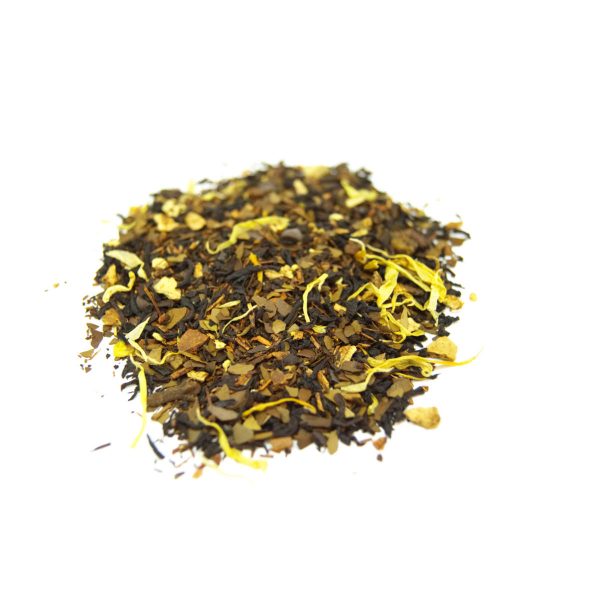
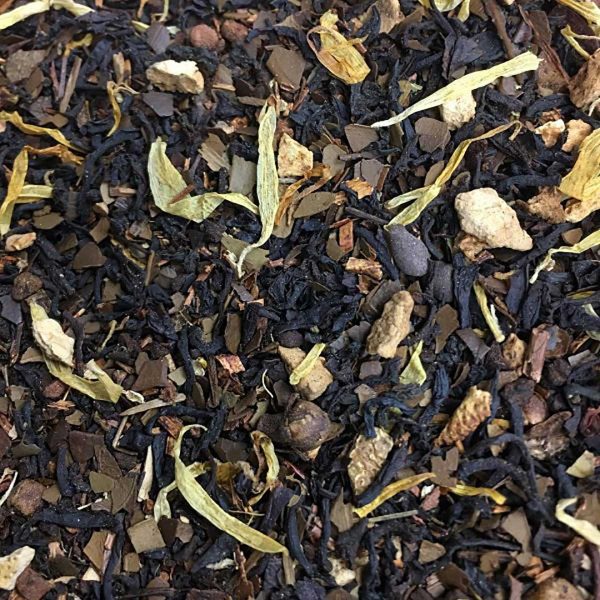
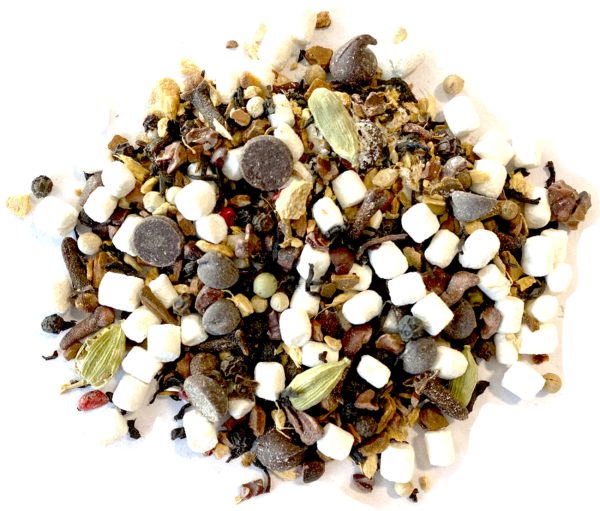
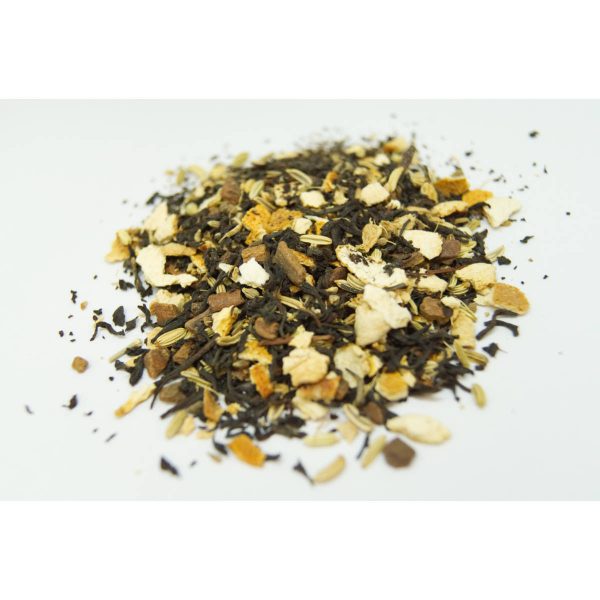
Ingredients: Steep Me Proprietary Organic and Wildcrafted blend of Shou (ripe) Puerh Tea from Yunnan Province in China aged by Microbial Fermentation. These whole, uncompressed tea leaves give a unique flavor and aroma. A traditional Superior Black Tea from Anhui Provence in China – first produced in 19th century and has a gentle, malty, low astringent taste. This tea is renowned for its unique and complex flavor profile, A Ti Kuan Yin (Tieguanyin) Oolong originated from Anxi in the Fujian province in China and is named after the Iron Goddess of Mercy A Roasted Yerba Mate is part of a holly plant called the Ilex Paraguariensis plant that is indigenous to South America with a roasted flair, Pai Mu Tan Chinese White Tea (Chinese White with 2 leaves), Chinese Sencha Green Tea with a structured leaf and mild taste paired with Slivered Almonds, Super Cream Mini Caramel Chips, Coconut Bits, Dark Chocolate 72% Cacao Mini Chips, Cinamon Chip, Rubbed Cloves, Anise Seed, Ginger Root, Rainbow Peppercorns, Green Cardamon Pods with the Highest Quality Caramel & Amaretto Essential Oil
CONTAINS: MILK ~NUTS(Almonds)
Alternatively, try our Indian Spice Chai OR Yogi Chai OR Spicy Spicy Chai OR Samurai Chai OR Friends in Chai Places OR Mate Spice OR Masala Chai OR Pepper Lovers Chai OR Nilla Chai OR Thai Tea OR Izadora Shuffle OR Dougie Dance OR Chai 2 Mocha U OR Chai Hazn‘ OR Chaga Chai OR About the Chai OR Marcell Black Tea OR Cheshire Black Tea OR Runner’s High OR “Mull It” Over OR Traditional Chai OR Java Jitters Yerba Mate OR Carnival Yerba Mate Tea.
Why yerba mate is a great alternative for the physically active person and recovery! http://www.planetyerbamate.com/yerba-mate-benefits-weightlifting/
“Processed in a facility that also processes food containing milk, egg, fish, peanut, shellfish, soy, tree nuts, wheat, and sesame. May contain traces of milk, egg, fish, peanut, shellfish, soy, tree nuts, wheat, and sesame.”
Additional information
| Weight | 4 oz |
|---|---|
| Size | 1 oz sample bag, 1/2 # Bulk Bag, 4oz Sealed Bag |
Benefits